The right heart rate monitor can make cycling workouts more measurable, whether you are following structured intervals, tracking endurance effort, or simply riding more consistently. Chest straps typically deliver the most responsive readings, while armbands offer a more comfortable alternative for some riders.
This roundup compares 10 heart rate monitors for cycling across connectivity, comfort, battery life, water resistance, and compatibility with bike computers, smart trainers, phones, and fitness apps.
Best 10 Heart Rate Monitor for Cycling Picks for 2026
Best for Data-Driven Athletes

- Real-time heart rate and HRV data
- Records workouts and syncs with Garmin Connect
- Rechargeable battery lasts up to 2 months
Best For: Garmin users seeking advanced training data
Best for Broad Compatibility

- Bluetooth, ANT+, and 5 kHz connectivity
- Waterproof with internal memory
- Up to 400 hours of battery life
Best For: Cyclists using multiple devices and platforms
Best for Garmin Essentials

- Real-time heart rate and HRV transmission
- Up to 1 year of replaceable-battery life
- Machine-washable strap with 3 ATM water rating
Best For: Garmin users wanting simple, durable tracking
Best Chest-Strap Alternative

- Comfortable forearm, bicep, or tricep placement
- Bluetooth and ANT+ connectivity
- IP68 protection and HRV mode
Best For: Cyclists preferring an optical armband
Long-Lasting Pick

- Up to 365 hours of battery life
- IPX7 waterproof and lightweight design
- Adjustable strap for cycling and multiple sports
Best For: Cyclists seeking long battery life and a flexible multisport chest strap
Connected Training Pick

- ECG chest sensor for real-time data
- Bluetooth and ANT+ with three Bluetooth connections
- Rechargeable battery and LED status alerts
Best For: Cyclists using multiple apps, devices, or connected training equipment
Versatile Compatibility Pick
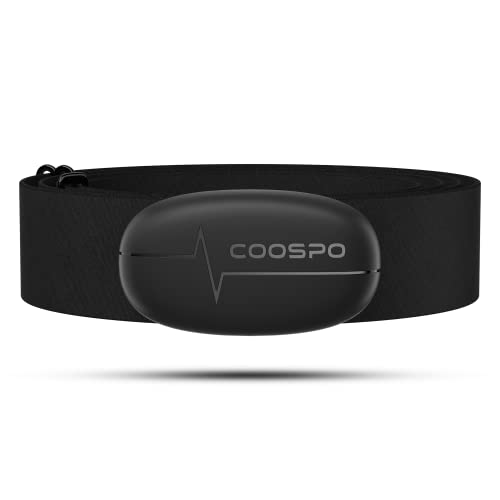
- Bluetooth and ANT+ dual-mode connection
- Works with bike computers, watches, apps, and gym equipment
- Up to 300 hours with a replaceable CR2032 battery
Best For: Cyclists needing broad compatibility across indoor and outdoor training devices
Long-Range Training Pick

- ANT+ and Bluetooth can operate simultaneously
- Up to 1,000 hours of stated battery life
- IP67 dustproof and waterproof design
Best For: Cyclists using multiple computers and training apps
Comfort-Focused Value Pick
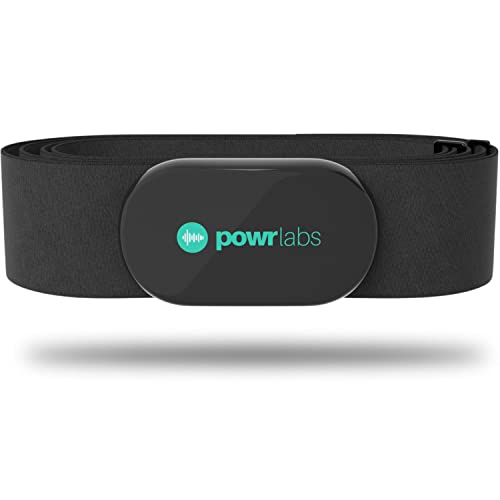
- Dual ANT+ and Bluetooth connectivity
- Soft, seamless strap designed for less chafing
- More than 400 hours of stated battery life
Best For: Long training sessions across many cycling devices
Easy-Confirmation Pick

- LED indicates readiness and connection
- ANT+ and Bluetooth compatible
- Up to 800 hours of stated battery life
Best For: Cyclists wanting quick, visible startup confirmation
Best for Data-Driven Athletes – Garmin HRM 600
The Garmin HRM 600 is a feature-rich heart rate monitor for cycling that sends real-time heart rate and HRV data to compatible Garmin devices, fitness equipment, and apps. Its rechargeable battery, washable strap, and workout recording make it a strong option for athletes who want more than basic pulse tracking.
Best For: Garmin users and data-driven athletes who want heart rate, HRV, workout recording, and additional training metrics.
Pros:
- Transmits heart rate and HRV data to compatible cycling computers, smartwatches, equipment, and apps
- Records workouts when you cannot wear a watch and syncs data to Garmin Connect
- Machine-washable strap is available in two sizes
- Rechargeable battery lasts up to 2 months
Cons:
- Some running-dynamics features require a compatible smartwatch
- Its broad feature set may be more than casual cyclists need
The HRM 600 is especially compelling if you already use Garmin equipment and want deeper performance data. For simpler cycling heart-rate tracking, a less feature-heavy sensor may be easier to justify.
Best for Broad Compatibility – Polar H10
The Polar H10 is a versatile heart rate monitor for cycling with Bluetooth, ANT+, and 5 kHz connectivity. Its chest strap is designed for accurate measurement, while waterproof construction and internal memory support training across different devices and environments.
Best For: Cyclists who need a highly compatible chest strap for cycling computers, phones, fitness equipment, and apps.
Pros:
- Supports Bluetooth, ANT+, and 5 kHz connections
- Can use Bluetooth and ANT+ simultaneously, plus two Bluetooth connections
- Waterproof and includes internal memory for multiple hours
- Battery provides up to 400 hours of use
Cons:
- Uses a replaceable CR2025 button-cell battery
- Chest straps may feel less convenient than an armband for some riders
The H10 is a practical choice when compatibility and measurement precision are priorities. Its multi-protocol connectivity makes it easier to integrate into a mixed-device cycling setup.
Best for Garmin Essentials – Garmin HRM 200
The Garmin HRM 200 is a straightforward heart rate monitor for cycling that sends real-time heart rate and HRV data to compatible Garmin cycling computers, smartwatches, equipment, and apps. It combines a washable strap with a replaceable battery designed to last up to a year.
Best For: Garmin users who want reliable heart-rate and HRV transmission without the added features of a more advanced sensor.
Pros:
- Transmits heart rate and HRV data to compatible Garmin devices and apps
- Battery lasts up to 1 year and is user-replaceable
- Machine-washable strap is available in two sizes
- 3 ATM water rating supports durable everyday use
Cons:
- Requires compatible equipment or apps to receive its data
- Does not include the HRM 600’s workout-recording features
The HRM 200 focuses on the core features most cyclists need: live data, broad Garmin compatibility, and low-maintenance battery life. It is a sensible middle ground for riders who do not need extensive extra metrics.
Best Chest-Strap Alternative – Scosche Rhythm+ 2.0
The Scosche Rhythm+ 2.0 is an armband-style heart rate monitor for cycling that uses optical sensing and connects through Bluetooth or ANT+. Its adjustable forearm, bicep, or tricep fit offers an alternative to a chest strap, while IP68 protection suits indoor and outdoor training.
Best For: Cyclists who prefer an armband and want Bluetooth or ANT+ compatibility with popular training apps and devices.
Pros:
- Adjustable armband can be worn on the forearm, bicep, or tricep
- Connects through Bluetooth or ANT+
- IP68 waterproof design handles sweat and rain
- HRV mode captures RR interval data for compatible apps
Cons:
- Battery life is up to 24 hours
- Armband positioning may require adjustment for a secure fit
The Rhythm+ 2.0 is a useful choice for riders who find chest straps restrictive. It offers flexible placement and app connectivity, though its shorter battery life means more frequent charging than the Garmin and Polar options.
Long-Lasting Pick – iGPSPORT HR50 Chest Strap
If you want a heart rate monitor for cycling that can also handle other workouts, the iGPSPORT HR50 offers Bluetooth connectivity, IPX7 waterproofing, and an adjustable elastic chest strap. Its standout feature is the claimed battery life of up to 365 hours.
Best For: Cyclists and multisport users who prioritize long battery life and a flexible fit.
Pros:
- Up to 365 hours of battery life
- IPX7 waterproof construction for training in wet conditions
- Adjustable 65–95 cm strap designed for chest circumferences from 65–120 cm
- Suitable for cycling, running, jogging, yoga, and fitness
Cons:
- The supplied details do not specify included bike computers or watches
- Software update support is listed as unknown
The HR50 is a practical choice when minimizing battery changes matters. Its broad activity support and adjustable strap make it versatile, while the included sensor is designed to connect with compatible smartphones, bike computers, and sports watches.
Connected Training Pick – Wahoo TRACKR HEART RATE
The Wahoo TRACKR is a heart rate monitor for cycling built around ECG chest sensing, rechargeable power, and broad device compatibility. Bluetooth and ANT+ support make it suitable for connecting to smartphones, training apps, fitness equipment, and cycling accessories.
Best For: Riders who want rechargeable power, multi-device connectivity, and an LED status indicator.
Pros:
- ECG chest sensor provides real-time heart rate data
- Bluetooth and ANT+ connectivity, with up to three Bluetooth connections at once
- Rechargeable battery with over 100 hours of active life; product details also list up to 200 hours
- Slim, soft strap and LED alerts for heart rate detection, battery, and connection status
Cons:
- Battery-life figures vary between the product bullets and detailed specifications
- One-year manufacturer warranty is shorter than some competing options
TRACKR stands out for cyclists who regularly move between apps and devices. Its rechargeable design reduces reliance on disposable batteries, while simultaneous Bluetooth connections can simplify more involved training setups.
Versatile Compatibility Pick – COOSPO H6 Cycling Chest Strap
The COOSPO H6 is a heart rate monitor for cycling that combines Bluetooth and ANT+ transmission with support for bike computers, sports watches, fitness apps, and gym equipment. Its replaceable CR2032 battery is rated for up to 300 hours of use.
Best For: Cyclists who need broad compatibility with bike computers, apps, watches, and indoor training equipment.
Pros:
- Bluetooth and ANT+ dual-mode wireless connectivity
- Compatible with Garmin and COOSPO bike computers, sports watches, and apps such as Strava and Zwift
- Up to 300 hours of battery life using a replaceable CR2032 battery
- IP67 protection for rainy-day training and sweat
Cons:
- Not intended for swimming or soaking
- The electrode areas should be moistened before use for stable transmission
- The battery is replaceable rather than rechargeable
The H6 is a strong fit for riders with a mixed ecosystem of cycling hardware and training apps. Its extensive compatibility is the main attraction, while the replaceable battery can be convenient for users who prefer quick battery swaps.
Long-Range Training Pick – Magene H64
The Magene H64 is a practical heart rate monitor for cycling when you want dual ANT+/Bluetooth connectivity and extended battery life. It can transmit to compatible bike computers while also connecting with a Bluetooth fitness app, making it useful for indoor and outdoor training setups.
Best For: Cyclists who want long battery life and broad device compatibility.
Pros:
- Supports both ANT+ and Bluetooth connections simultaneously.
- Rated for up to 1,000 hours of battery life under stated test conditions.
- IP67 dustproof and waterproof design.
- Compatible with many bike computers, watches, smartphones, and training platforms.
Cons:
- Requires wetting the electrode area and positioning the strap correctly for reliable detection.
- Phone pairing must be completed inside the fitness app rather than through system Bluetooth settings.
- Swimming use is not specified in the supplied notes.
With its long rated runtime, replaceable-style wearable setup, and simultaneous ANT+/Bluetooth transmission, the H64 is well suited to cyclists who regularly move between bike computers and training apps.
Comfort-Focused Value Pick – POWR LABS Chest Strap
The POWR LABS chest strap is a versatile heart rate monitor for cycling, pairing with Garmin, Wahoo, Polar, Peloton, smartphones, and numerous fitness apps through ANT+ or Bluetooth. Its soft fabric strap and broad adjustment range are geared toward longer training sessions.
Best For: Riders prioritizing comfort and wide compatibility at a value-oriented price.
Pros:
- Dual ANT+ and Bluetooth connectivity works with many cycling devices and apps.
- Soft, seamless fabric is designed to reduce chafing and slipping.
- Adjusts across a 24- to 61-inch range according to the supplied notes.
- Offers more than 400 hours of stated battery life with a replaceable battery included.
Cons:
- Must be worn before pairing.
- Battery life is shorter than some competing models in this roundup.
- Compatibility and accuracy depend on the connected device or app.
The combination of dual-protocol connectivity, a wide-fitting strap, and sweat- and water-resistant construction makes this a sensible option for cyclists who want a comfortable monitor without committing to a premium brand.
Easy-Confirmation Pick – GEOID HS500
The GEOID HS500 is a straightforward heart rate monitor for cycling with ANT+/Bluetooth support, a visible connection indicator, and an automatic wake-up feature. Its LED confirmation can help verify that the strap is active before you settle into a ride.
Best For: Cyclists who want quick activation and a visual connection check.
Pros:
- Flashing LED confirms readiness and connection after the sensor is worn.
- Supports ANT+ bike computers and Bluetooth phones, apps, and fitness equipment.
- Rated for up to 800 hours of battery life with a replaceable CR2032 battery.
- IP67 waterproof construction and a one-year limited warranty.
Cons:
- Bluetooth pairing must be performed through the app rather than directly in phone settings.
- Swimming is not recommended.
- The LED turns off after its initial flashes, so it is not a continuous display.
For riders who value clear startup feedback, the HS500 combines a fast wake-up time with broad ANT+/Bluetooth compatibility and a replaceable battery. It is especially convenient for checking the sensor before a ride begins.
How We Picked the Best Heart Rate Monitor for Cycling
We focused on monitors that support the connections cyclists use most: ANT+ for bike computers and indoor trainers, Bluetooth for phones and apps, or both. We also considered sensor format, strap comfort, battery expectations, water resistance, device compatibility, and the needs of riders ranging from casual commuters to structured-training athletes.
Chest straps generally earned priority because they sit close to the heart and tend to respond quickly to changes in effort. Armband models can be easier to wear and may suit riders who dislike chest straps, although fit and optical-sensor performance can vary by person and activity.
Quick Comparison
| Best For | Recommended Type | What to Prioritize |
|---|---|---|
| Structured training | Dual ANT+ and Bluetooth chest strap | Fast response and broad compatibility |
| Indoor cycling | Chest strap or armband with Bluetooth | Stable app and trainer connection |
| Bike computers | ANT+ chest strap | Reliable pairing and battery life |
| Comfort-focused riding | Optical armband | Adjustable fit and low-profile design |
| Budget training | Basic dual-protocol chest strap | Core accuracy without extra features |
Key Buying Factors for a Heart Rate Monitor for Cycling
Connectivity
Choose ANT+ if you primarily use a cycling computer, smart trainer, or compatible watch. Bluetooth is useful for smartphones, tablets, and training platforms. Dual-protocol models provide the most flexibility, especially if you switch between outdoor and indoor riding.
Chest Strap Versus Armband
A chest strap is usually the safest choice for interval work because it measures close to the heart and reacts quickly. An armband may feel less restrictive and can be preferable for long rides, but it must maintain firm, consistent skin contact. Whichever format you choose, correct placement and a secure fit matter.
Battery and Water Resistance
Look for a replaceable or rechargeable battery that suits your training schedule. Water resistance is valuable for sweaty workouts and wet-weather rides; an IP rating can provide a clearer indication of protection than vague splash-resistant wording.
Compatibility and Maintenance
Before buying, confirm that the monitor works with your bike computer, watch, phone, trainer, and preferred app. Wash or wipe the strap as directed, allow it to dry, and disconnect or remove the sensor when it is not in use to help preserve battery life.
Who Should Buy Which Heart Rate Monitor for Cycling?
Choose the Garmin HRM 600 or Polar H10 if you want a well-established, training-focused chest strap and broad device compatibility. Choose the Garmin HRM 200 for straightforward pairing within a Garmin-centered setup.
Choose the Scosche Rhythm armband if chest straps are uncomfortable or you prefer an optical sensor on your upper arm. Choose Wahoo TRACKR if your cycling setup uses Wahoo hardware or a mix of Bluetooth and ANT+ devices.
Choose iGPSPORT, COOSPO, Magene, POWR LABS, or HS500 when you want core heart-rate tracking and dual-protocol connectivity at a potentially lower cost. Check the exact included strap, battery design, app support, and seller warranty before ordering, since specifications can vary by listing or revision.