Choosing a solar generator for expedition use means balancing weight, charging speed, output, and battery durability. The right setup should power essential gear without slowing you down.
Below, we focus on models that make sense for real trips: compact units for light packing, larger systems for multi-day camps, and fast-charging options for unpredictable conditions.
Best 10 Solar Generator for Expedition Use Picks for 2026
Fast-Charge Expedition Bundle
Jackery 1000 v2 with 200W Panel

- 1,070Wh LiFePO4 battery with 1,500W AC output
- 23.8 lb build with foldable handle for easier carrying
- One-hour emergency charging via the Jackery app
Best For: campers and expedition travelers who want fast recharge and solid output
Ultralight Trail Pick
Jackery Explorer 300 with 40W Panel

- 7.5 lb design is easy to carry on long hikes
- 300W output for laptops, drones, cameras, and small gear
- LiFePO4 battery delivers 4,000+ cycles of service life
Best For: lightweight expeditions and short trips with small-device charging needs
High-Output Fast-Charge Pick
Anker SOLIX C1000 Gen 2 Portable Power Station

- 2,000W output with 3,000W peak and 10 ports
- 49-minute recharge with HyperFlash at 1,600W
- 1,024Wh LiFePO4 battery built for long-term use
Best For: expeditions needing fast charging and higher-output power in a compact unit
Expandable Expedition Kit

- 1,024Wh LiFePO4 battery with 2,000W AC output
- Includes a 240W panel and supports dual charging
- Expandable to 5,120Wh for larger off-grid needs
Best For: expeditions that need an included panel and future capacity expansion
Heavy-Duty Expedition Backup
ABOK Ark3600 3840Wh LiFePO4 Power Station
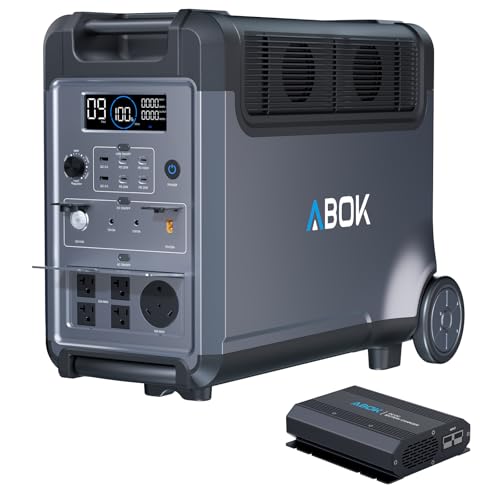
- 3840Wh battery expands to 11520Wh
- 3600W rated output with 4500W peak
- 15 ports and app monitoring
Best For: Expedition base camps and high-capacity off-grid backup
Compact Starter Kit
EnginStar 300W Portable Solar Generator

- 296Wh capacity with 300W output
- Includes a 60W foldable solar panel
- Lightweight 6.5-pound portable design
Best For: Lightweight expedition kits and small-device charging
Fast-Charge Mid-Size Pick
EcoFlow DELTA 3 Classic Solar Generator

- 1024Wh LiFePO4 battery with 1800W output
- 0-80% AC charging in 45 minutes
- 220W panel and <10ms UPS support
Best For: Expedition travelers needing fast recharge and reliable everyday power
Lightweight Solar Kit
EBL 500W Solar Kit with 100W Panel

- 519.48Wh battery with 500W AC output
- Includes foldable 100W solar panel
- 14.1 lb station with handle for portability
Best For: Weekend trips and light expedition power
High-Capacity Solar Station
BLAVOR 1600W Station with Built-In Panel

- 1024Wh LiFePO4 battery with 1600W output
- Built-in foldable 40W solar panel
- Eight outlets and 100W USB-C fast charging
Best For: Longer trips and higher-demand outdoor gear
Fast-Charge Power Kit
OUPES Mega 1 2000W Solar Generator Kit

- 2000W output with 4500W surge
- 1024Wh LiFePO4 battery expandable to 5120Wh
- Includes 100W panel and fast AC charging
Best For: Expeditions needing fast recharge and strong output
Fast-Charge Expedition Bundle – Jackery 1000 v2 with 200W Panel
If you want a solar generator for expedition use that still feels manageable to carry, this Jackery bundle hits a strong middle ground. It combines 1,070Wh of LiFePO4-backed capacity with 1,500W AC output, so it can support a wider range of expedition gear while staying light enough for road trips, camping, and emergency readiness.
Best For: Expeditions where you need strong output, fast recharge options, and a relatively compact carry-friendly setup.
Pros:
- 1,500W AC output with 3,000W surge for running multiple appliances and devices
- 1,070Wh capacity in a 23.8 lb unit with a foldable handle
- One-hour emergency charging is available through the Jackery app
- Includes a 200W solar panel and 100W USB-C output for flexible use
Cons:
- The 1-hour charge requires emergency charging mode to be enabled in the app
- Some charging modes are slower by design to help preserve battery health
Overall, this model is a practical choice if expedition use means balancing portability with real power output. It is especially appealing for travelers who value quick top-ups, app control, and a long-life LiFePO4 battery over maximum capacity.
Ultralight Trail Pick – Jackery Explorer 300 with 40W Panel
For expedition use where every pound matters, this Jackery solar generator is built around portability first. At 7.5 lbs, it is easy to pack for hikes, travel, and camping, while still offering enough output for smaller electronics like laptops, drones, and cameras.
Best For: Lightweight expeditions, short trips, and minimal gear setups that still need dependable solar power.
Pros:
- Very light at 7.5 lbs with an integrated handle
- 300W rated output with 600W peak surge and 6-device versatility
- LiFePO4 battery rated for over 4,000 cycles and 11+ years of use
- Includes a 40W solar panel for portable off-grid charging
Cons:
- 300W output is best suited to smaller devices rather than heavy-duty loads
- The included 40W panel charges more slowly than larger panel setups
This is a smart pick if your expedition kit prioritizes low weight and simple charging for essential gear. It is less about powering big appliances and more about keeping the basics alive without adding bulk.
High-Output Fast-Charge Pick – Anker SOLIX C1000 Gen 2 Portable Power Station
This solar generator for expedition use is aimed at travelers who need more power without moving into truly oversized gear. The Anker SOLIX C1000 Gen 2 delivers 2,000W output, a 1,024Wh LiFePO4 battery, and fast recharge options, making it a strong fit for camps, remote work, and off-grid stops where time and space are limited.
Best For: Expeditions that need high output, fast charging, and room for multiple devices.
Pros:
- 2,000W output with 3,000W peak and up to 10 ports
- Fully recharges in 49 minutes with 1,600W input using HyperFlash tech
- 1,024Wh LiFePO4 battery with 4,000-cycle longevity
- Compact build is smaller and lighter than similar models
Cons:
- Solar charging is optional, so the panel setup is not included here
- Full fast-charging performance depends on using the app to enable the feature
For expedition users who value speed and output, this is one of the most capable portable options in the group. It offers a good balance of portability, UPS backup, and enough wattage to support demanding gear.
Expandable Expedition Kit – OUPES Mega 1 with 240W Panel
If your solar generator for expedition use needs to start small but leave room to grow, the OUPES Mega 1 is built around that idea. It includes a 240W panel, a 1,024Wh LiFePO4 battery, and 2,000W AC output, plus expandability to a much larger 5,120Wh system if you need more capacity later.
Best For: Expeds and off-grid trips that may need expandable storage, included solar hardware, and UPS support.
Pros:
- Includes a 240W monocrystalline panel in the kit
- 2,000W AC output can run a fridge, CPAP, and electronics
- Expandable to 5,120Wh with an additional battery
- Dual charging supports solar and AC together for up to 2,200W input
Cons:
- At 27.8 lbs, it is heavier than the most travel-friendly compact units
- Solar recharge time depends on sunlight conditions
This is a versatile kit for users who want an expedition-ready setup without locking themselves into a fixed capacity. The included panel, UPS feature, and expansion path make it especially practical for serious off-grid planning.
Heavy-Duty Expedition Backup – ABOK Ark3600 3840Wh LiFePO4 Power Station
If you need a solar generator for expedition use that can keep bigger gear running, the ABOK Ark3600 is built for high-demand trips and remote backup. Its 3840Wh LiFePO4 battery, 3600W rated output, and expandable capacity make it far better suited to long outings than a small charging pack. The wheels, telescoping handle, and app monitoring also make it easier to move and manage at base camp.
Best For: Expedition base camps, RV travelers, and users who need high-capacity off-grid power for multiple devices and appliances.
Pros:
- 3840Wh capacity expands up to 11520Wh for much longer runtime.
- 3600W rated output with 4500W peak supports a wide range of appliances.
- 15 output ports help power many devices at once.
- Fast charging options include AC, PV, and combined AC + PV.
Cons:
- Large capacity and wheel design suggest it is less grab-and-go than compact units.
- Charging has a temperature limit; it should be charged above 32°F (0°C).
Overall, this is the strongest option here for expedition-style power needs when capacity and output matter more than compact size. It is a practical pick if you want one unit that can support both gear charging and heavier appliances at camp.
Compact Starter Kit – EnginStar 300W Portable Solar Generator
For lighter solar generator for expedition use, this EnginStar bundle focuses on portability and basic charging rather than heavy appliance support. The 296Wh power station weighs just 6.5 pounds and includes a foldable 60W solar panel, making it easy to pack for camping, van trips, or emergency carry. It is best viewed as a compact power source for phones, cameras, laptops, and similar small electronics.
Best For: Lightweight expedition kits, solo campers, and travelers who only need small-device charging.
Pros:
- Very portable at 6.5 pounds with a compact footprint.
- Includes a 60W foldable solar panel in the package.
- 296Wh capacity and 300W AC output cover small electronics.
- Eight output ports support several devices at the same time.
Cons:
- 300W output is not suited for larger appliances.
- Runtime and capacity are modest compared with bigger expedition units.
- Best for small camping gear rather than power-hungry equipment.
This is the most packable option in the group, but it is clearly aimed at light-duty use. Choose it if portability and included solar charging matter more than runtime or high output.
Fast-Charge Mid-Size Pick – EcoFlow DELTA 3 Classic Solar Generator
The EcoFlow DELTA 3 Classic is a strong solar generator for expedition use when you want a balance of portability, fast charging, and dependable output. With a 1024Wh LiFePO4 battery, 1800W AC output, and a 220W solar panel, it can handle common camp and travel loads without jumping into the oversized class. The <10ms UPS feature also makes it a better fit for sensitive electronics than many basic portable units.
Best For: Expedition travelers who want fast recharge times and reliable power for electronics and small appliances.
Pros:
- 1800W output with 3600W surge covers many everyday devices.
- Charges very quickly, reaching 0-80% in 45 minutes on AC power.
- 220W solar panel can recharge the unit in about 5.8 hours.
- <10ms UPS helps protect sensitive equipment from interruptions.
Cons:
- Battery capacity is smaller than larger expedition-class stations.
- The solar generator and panel may arrive separately.
For expedition use, this model stands out for fast turnaround and solid everyday capability rather than huge stored energy. It is a smart middle-ground choice if you want efficient charging and dependable output in a manageable package.
Lightweight Solar Kit – EBL 500W Solar Kit with 100W Panel
If you want a solar generator for expedition use that stays light and simple, this EBL kit is built around portability and practical recharging. The 519.48Wh power station pairs with a 100W foldable panel, giving you an all-in-one setup for camping, road trips, fishing, and basic emergency backup.
Best For: Weekend expeditions, lightweight camping, and users who want a compact solar bundle for essential devices.
Pros:
- 519.48Wh capacity and 500W AC output cover phones, laptops, lights, fans, and similar essentials.
- Includes a 100W bifold solar panel that can recharge the station in about 6-9 hours with solar power.
- Lightweight 14.1 lb power station with a built-in handle for easier carrying on the move.
- Multiple outputs, including AC, USB-C PD, USB-A, DC, car port, and wireless charging.
Cons:
- 500W output limits use to smaller appliances and devices under that threshold.
- The solar panel is practical, but not as high-output as larger expedition-focused systems.
For travelers who need a straightforward backup kit instead of a heavy-duty power plant, this EBL package offers a balanced mix of portability, solar charging, and everyday utility.
High-Capacity Solar Station – BLAVOR 1600W Station with Built-In Panel
This solar generator for expedition use is aimed at travelers who need more output and a bigger battery reserve. BLAVOR combines a 1024Wh LiFePO4 power station with a built-in 40W foldable solar panel, plus support for external panels when you need faster recharging.
Best For: Extended camping, RV travel, and expedition users who want higher output for more demanding gear.
Pros:
- 1024Wh capacity and 1600W rated output can run a wide range of devices and appliances.
- Built-in 40W solar panel adds convenient on-the-go solar charging without separate setup.
- LiFePO4 battery is rated for 3500+ cycles and is supported by a smart BMS for safety.
- Eight outlets and 100W USB-C fast charging add flexibility for multiple devices.
Cons:
- The included solar panel is only 40W, so solar recharge speed will be modest compared with larger panel kits.
- At this capacity, it is more of a carry-along power station than a truly ultra-light expedition unit.
If you need a rugged, higher-capacity solar generator with built-in charging convenience, this BLAVOR model is a strong fit for longer outdoor trips and backup use.
Fast-Charge Power Kit – OUPES Mega 1 2000W Solar Generator Kit
For a solar generator for expedition use where output and recharge speed matter, the OUPES Mega 1 stands out with serious power and fast turnaround. It delivers a 1024Wh LiFePO4 battery, 2000W pure sine wave output, and includes a 100W solar panel for immediate off-grid charging.
Best For: Expeditions, remote camping, and users who want fast charging with heavy-duty output.
Pros:
- 2000W pure sine wave AC output with 4500W surge handles demanding appliances and startup loads.
- 1024Wh capacity is expandable to 5120Wh with extra batteries for longer trips.
- Includes a 100W solar panel and supports up to 800W solar input for stronger off-grid charging.
- Fast AC charging can reach 0-80% in 36 minutes, with even faster dual charging claims.
Cons:
- Heavier-duty performance is great for capability, but it is less minimal than smaller expedition packs.
- To take full advantage of the solar input, you may need to add additional panels beyond the included 100W unit.
Overall, this OUPES kit is best when your expedition needs more than basic phone charging and you want a power station that recharges quickly and scales up over time.
How We Picked the Best Solar Generator for Expedition Use
For a Solar Generator for Expedition Use, we prioritized practical field performance over marketing claims. That means LiFePO4 battery chemistry, strong AC and USB-C output, fast recharging, and enough capacity to cover devices like phones, cameras, drones, lights, GPS units, and small appliances.
We also looked at portability, expansion potential, solar-panel compatibility, outlet variety, and features that help in remote environments such as UPS support, app control, and pure sine wave output.
Quick Comparison
Smaller units are best when every pound matters and you only need to charge essentials. Mid-size options offer the best balance for most overland, camping, and fieldwork trips. High-capacity systems are better for base camps, extended stays, or teams running multiple devices.
If you expect cloudy days or long stretches away from grid power, favor faster wall charging and larger solar input. If mobility is the priority, focus on compact builds and lower overall weight.
Key Buying Factors for Solar Generator for Expedition Use
Battery Capacity and Chemistry
Capacity, measured in watt-hours, determines how long the unit can run your gear. LiFePO4 batteries are preferred for expedition use because they usually offer longer cycle life and better thermal stability than older lithium-ion designs.
Output Power
Check both continuous AC output and surge capacity. Higher output matters if you plan to run camera chargers, cooking gear, power tools, or equipment with startup spikes. USB-C PD output is especially useful for modern electronics.
Charging Speed and Solar Input
Fast recharge times can be a major advantage in the field, especially when weather windows are short. Look at how quickly the unit charges from wall power and how much solar input it can accept, since that affects real-world turnaround time.
Portability and Form Factor
For expedition use, a smaller footprint can be more valuable than raw capacity. Consider whether you can carry the unit comfortably, store it securely in a vehicle, and deploy the solar panels quickly at camp.
Durability and Useful Features
UPS functionality, app monitoring, and a wide range of outputs can make a power station easier to manage on the trail or in a vehicle-based camp. Pure sine wave AC is also important for sensitive electronics.
Who Should Buy Which Solar Generator for Expedition Use?
Choose a compact model if you need backup power for personal devices, short weekend trips, or minimalist travel. Pick a mid-size power station if you want a reliable all-around Solar Generator for Expedition Use with a better mix of capacity and portability. Go with a high-capacity, expandable system if you are supporting multiple people, staying off-grid for days, or powering more demanding equipment.
In short, the best choice depends on how far you travel, how much gear you carry, and how often you can recharge. Match the battery size and solar input to your actual field routine, not just the biggest spec sheet.