If you travel beyond reliable cell service, a satellite phone for wilderness trips can be the difference between a minor delay and a real emergency. The right device helps you call, text, or trigger SOS support when standard networks disappear.
Below, we focus on the best options for backcountry safety, from true satellite phones to lighter communicators that are often easier to carry on long hikes and remote expeditions.
Best 10 Satellite Phone for Wilderness Picks for 2026
Global Voice Kit
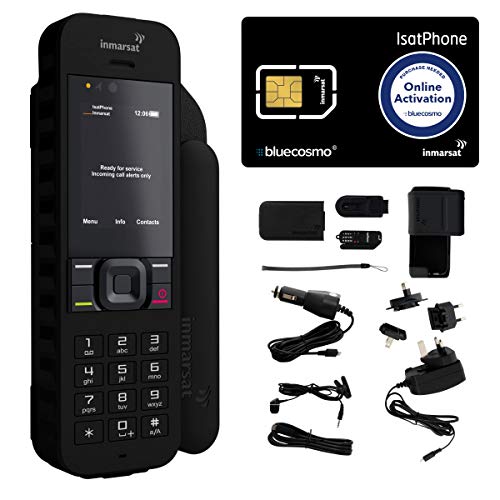
- Global coverage with voice, SMS, GPS tracking, and SOS
- Complete kit includes handset, SIM, chargers, and accessories
- IP65 water resistance plus 8 hours talk time
Best For: Remote travelers who want a complete satellite phone kit
Classic Backup Pick

- Satellite handset body only, no battery included
- 14 hours talk time and 19 hours standby
- Supports 3-way conference calling
Best For: Buyers who already have compatible accessories
Lightweight Trail Messenger

- Two-way messaging and interactive SOS with subscription
- Ultra-light 99 g design for hiking and backpacking
- Up to 14 days battery in 10-minute tracking mode
Best For: Hikers and backpackers who want compact emergency messaging
Rugged Iridium Bundle

- Includes 100 prepaid minutes with 30-day validity
- Global voice and SMS via the Iridium network
- Rugged, waterproof, GPS-enabled handset
Best For: Remote adventurers who want prepaid Iridium service included
Bluetooth SOS Messenger
Spot X for Two-Way Field Communication

- Bluetooth texting plus standalone message support
- 24/7 SOS protection with GPS sharing
- Up to 240 hours of battery life
Best For: Wilderness travelers who want messaging and SOS support
Global Voice Satellite Phone
Iridium 9555 Bundle for Remote Travel

- True global voice coverage on the Iridium network
- Also supports SMS and short email messaging
- Bundle includes prepaid SIM and accessories
Best For: Remote users who need global calling and text backup
Compact GPS Communicator
Garmin inReach Mini 2 for Backcountry Safety

- Iridium-based global two-way messaging
- Interactive SOS with weather and routing tools
- Compact, rugged, and water-resistant design
Best For: Backpackers and solo users wanting a lightweight safety communicator
Military-Grade Iridium
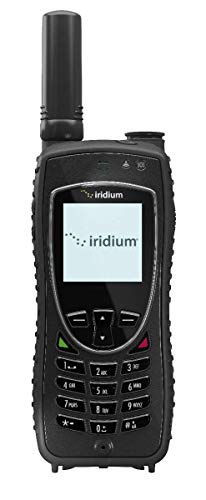
- MIL-STD 810F and IP65-rated toughness
- Up to 30 hours standby, 4 hours talk
- Two-way SMS and short email support
Best For: Rugged off-grid calling and basic messaging in harsh wilderness conditions
Smartphone Messenger
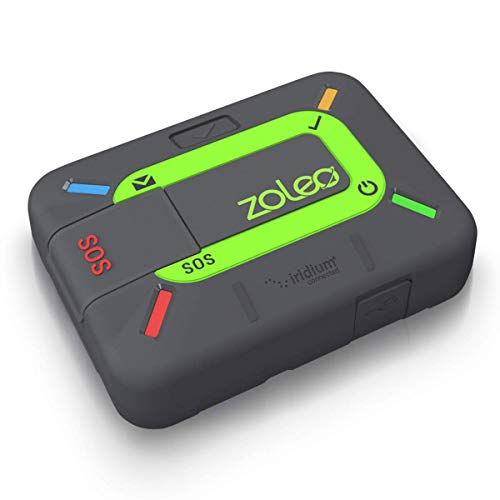
- Works with your smartphone for 2-way messaging
- SOS alerting with GPS location and 24/7 monitoring
- IP68 durability and 200+ hour battery life
Best For: Affordable off-grid messaging, check-ins, and SOS on wilderness trips
Global Voice Bundle

- Global voice, SMS, GPS tracking, and SOS
- Prepaid SIM and accessory bundle included
- MIL-STD 810F and IP65 rugged build
Best For: A complete, ready-to-deploy satellite phone kit for remote expeditions
Global Voice Kit – BlueCosmo IsatPhone 2.1
If you want a satellite phone for wilderness trips with straightforward global calling, the BlueCosmo Inmarsat IsatPhone 2.1 kit is built around dependable voice, SMS, GPS tracking, and emergency SOS support. It comes as a complete starter bundle, so it is a practical option for users who want a ready-to-go setup rather than piecing together accessories separately.
Best For: Remote travelers and expedition users who want a full-featured satellite phone kit with global coverage.
Pros:
- Global coverage with no roaming charges for voice calls, SMS, GPS tracking, and SOS
- Complete kit includes handset, battery, chargers, holster, earpiece, lanyard, USB cable, and SIM card
- Rugged design with IP65 water resistance, IK04 shock resistance, and wide operating temperature range
- Long battery life rated at up to 8 hours talk time and 160 hours standby
Cons:
- Uses a proprietary satellite OS and is built for communications rather than general smartphone features
- Bulkier than a compact satellite messenger, at 318 g
Overall, this kit stands out if you need a true satellite phone for wilderness conditions and want hardware, SIM, and accessories included in one box. Its durability and battery life make it especially useful for backcountry travel and emergency planning.
Classic Backup Pick – Globalstar GSP-1600
The Globalstar GSP-1600 is a bare-bones satellite phone option for wilderness use when you want a simple handset focused on calls. Because this listing is phone body only and does not include a battery, it is best viewed as a replacement or parts-oriented buy rather than a plug-and-play emergency kit.
Best For: Buyers who already have compatible accessories and want a straightforward satellite handset body.
Pros:
- Built for satellite voice communication in a compact cordless phone form
- Talk time is listed at 14 hours with 19 hours standby
- Includes 3-way conference calling capability
- Useful as a basic handset for users familiar with the model
Cons:
- Phone body only, with no battery included
- Listing provides limited bundle support compared with full kits
- Not positioned as a modern all-in-one wilderness communications package
This model makes sense if you are replacing a device body or already have the needed power and accessories. For most wilderness buyers, the missing battery is the main factor to check before considering it.
Lightweight Trail Messenger – Garmin inReach Mini 2
For a satellite phone for wilderness trips where size matters more than handset-style calling, the Garmin inReach Mini 2 is a compact satellite communicator focused on messaging and SOS. It supports two-way messaging, location sharing, navigation tools, and app syncing, making it a strong pick for hikers who want communication without carrying a full-sized phone.
Best For: Hikers and backpackers who want a lightweight satellite communicator for messaging and SOS.
Pros:
- Very compact and lightweight at 99 g
- Enables two-way messaging and interactive SOS with an active satellite subscription
- TracBack routing, digital compass, and Garmin Explore syncing support navigation and trip planning
- Battery life up to 14 days in 10-minute tracking mode
Cons:
- Requires an active satellite subscription for key features
- Messaging device, not a full voice satellite phone
- Small 1.27-inch monochrome display limits on-device interaction
If your priority is staying reachable and triggerable in the backcountry, this is one of the most packable options in the group. It is better suited to messaging and tracking than traditional voice calling.
Rugged Iridium Bundle – OSAT 9555 with 100 Minutes
The OSAT Iridium 9555 is a solid satellite phone for wilderness travel when you want global voice and SMS coverage plus a prepaid airtime bundle to get started. With rugged construction, GPS support, and a compact bar-style design, it is aimed at remote adventures and emergency communication where reliability matters more than extras.
Best For: Remote adventurers and emergency-prep users who want Iridium coverage with prepaid minutes included.
Pros:
- Includes 100 prepaid minutes with 30-day validity for immediate use
- Global voice and SMS coverage through the Iridium network
- Rugged, waterproof, and GPS-enabled for remote environments
- Up to 4 hours talk time and 30 hours standby
Cons:
- Prepaid minutes expire after 30 days unless you extend or add more
- Shorter talk time than some other satellite phone options
- Best suited to communications, not general smartphone use
This bundle is a practical choice if you want a ready-to-activate Iridium handset for off-grid conditions. The included airtime and rugged build make it especially convenient for trips where setup speed and coverage are both priorities.
Bluetooth SOS Messenger – Spot X for Two-Way Field Communication
If you want a satellite phone for wilderness trips that emphasizes messaging and SOS support over full voice calling, the Spot X is a practical choice. It pairs with Bluetooth for easier texting from your phone, but it also works as a standalone device with its own U.S. mobile number for receiving messages in the backcountry.
Best For: Hikers, campers, and remote travelers who want two-way messages and emergency SOS in a compact messenger.
Pros:
- Two-way messaging with family or search and rescue via Bluetooth or on-device use.
- 24/7 SOS protection with GPS coordinates sent during emergencies.
- Globalstar-based location sharing for notifying others of your exact position.
- Long battery life rated up to 240 hours.
Cons:
- Subscription is required.
- It is a satellite messenger, not a full voice satellite phone.
For wilderness users who prioritize check-ins, location sharing, and emergency communication, the Spot X offers a focused feature set in a portable package. It is strongest as a safety and messaging tool rather than a traditional phone replacement.
Global Voice Satellite Phone – Iridium 9555 Bundle for Remote Travel
If you need a satellite phone for wilderness travel with true voice calling, the Iridium 9555 bundle is built around global reach and straightforward communication. It uses the Iridium network, which the notes describe as the only truly global satellite phone service, and it also adds SMS and short email support.
Best For: Expedition users, overlanders, boaters, and remote travelers who need global voice calling plus text backup.
Pros:
- True global satellite coverage across oceans, airways, and polar regions.
- Voice calling plus two-way SMS and short email capability.
- Compact handset with an internally stowed antenna and speakerphone.
- Bundle includes a prepaid SIM card and multiple accessories for setup and travel.
Cons:
- Talk time is listed at up to 3 hours.
- Bulkier than ultra-compact satellite messengers.
- Designed for subscription-based satellite service use.
This is the most phone-like option in the group and the best fit when voice communication matters most. The bundle approach also makes it easier to get started with the included SIM and accessories.
Compact GPS Communicator – Garmin inReach Mini 2 for Backcountry Safety
For a satellite phone for wilderness use that stays light and rugged, the Garmin inReach Mini 2 is a strong communicator-first option. It uses the Iridium network for global coverage, sends two-way texts and emails, and adds interactive SOS plus weather and navigation tools for backcountry trips.
Best For: Backpackers, hunters, and solo adventurers who want a lightweight satellite communicator with SOS and navigation features.
Pros:
- Global coverage via the Iridium satellite network.
- Two-way messaging, interactive SOS, and Garmin Response support.
- Very compact and rugged design with MIL-STD-810 durability and IPX7 water resistance.
- Useful extras like weather updates, TracBack routing, and a digital compass.
Cons:
- Requires a satellite airtime plan.
- It is a communicator rather than a voice satellite phone.
The inReach Mini 2 is best when portability and safety features matter more than handset-style calling. Its tiny size, long battery life, and navigation helpers make it a strong wilderness companion.
Military-Grade Iridium – Iridium 9575 Extreme
If you need a satellite phone for wilderness travel, the Iridium 9575 Extreme is built for harsh conditions and true off-grid voice coverage. It combines MIL-STD 810F toughness with IP65 water resistance, a weather-resistant keypad, and global Iridium satellite connectivity for calls, SMS, and short email.
Best For: Backpackers, guides, and remote travelers who want a rugged, standalone satellite phone for emergency calling and basic messaging.
Pros:
- MIL-STD 810F durability and IP65 protection for rough outdoor use.
- Up to 30 hours of standby time and up to 4 hours of talk time.
- Supports two-way SMS and short email capability.
- Illuminated, weather-resistant keypad for field use.
Cons:
- Talk time is limited compared with its standby battery rating.
- Basic messaging features only, not a full smartphone-style communicator.
- Service plan and SIM are needed for use.
For wilderness users who prioritize toughness and reliable satellite calling over extra features, this is a straightforward, proven option. Its rugged build and global Iridium network support make it a strong fit for remote expeditions where durability matters as much as connectivity.
Smartphone Messenger – ZOLEO Satellite Communicator
The ZOLEO satellite communicator is a practical satellite phone for wilderness trips if you prefer texting and app-based communication instead of traditional voice calling. Paired with your smartphone, it sends messages and emails over satellite, cellular, or Wi-Fi, and adds SOS alerting, check-ins, and GPS location sharing for backcountry peace of mind.
Best For: Hikers, campers, and outdoor users who want affordable off-grid messaging and emergency SOS through a smartphone accessory.
Pros:
- 2-way global messaging over satellite, cellular, and Wi-Fi.
- Emergency SOS with GPS location and 24/7 monitoring.
- Over 200 hours of battery life and IP68-rated durability.
- Unlimited check-ins included in the plan.
Cons:
- Requires a smartphone to use.
- Service plan is required for messaging and satellite functions.
- Not a full voice satellite phone.
For users who mainly need to stay reachable rather than place satellite calls, ZOLEO offers a flexible and lower-cost approach. Its long battery life, SOS features, and message routing options make it especially appealing for extended wilderness travel.
Global Voice Bundle – BlueCosmo Iridium Extreme
If you want a satellite phone for wilderness use with full voice, SMS, and GPS tracking capability, this BlueCosmo Iridium Extreme bundle is designed for serious remote coverage. It runs on the Iridium network, which offers global service without roaming charges, and the bundle includes the accessories and prepaid SIM needed to get started.
Best For: Remote adventurers and field teams who want a ready-to-use global satellite phone bundle with emergency features.
Pros:
- Truly global Iridium coverage with voice, SMS, GPS tracking, and SOS.
- Prepaid SIM included with no activation charges noted.
- Bundle includes charger, holster, earpiece, antenna adapter, and more.
- MIL-STD 810F toughness and IP65 rating for rugged use.
Cons:
- Service and airtime still need to be managed through prepaid plans.
- Bulkier bundle than a simpler messenger device.
- One-year manufacturer warranty, shorter than some competing warranties.
This bundle is a strong pick when you want a complete wilderness communications kit rather than just the handset. The included prepaid SIM and accessory package reduce setup friction, while Iridium’s global network coverage supports travel in very remote regions.
How We Picked the Best Satellite Phone for Wilderness
We prioritized devices that make sense for remote use: dependable network access, practical battery life, clear emergency features, and rugged designs that can handle cold, dust, moisture, and rough handling. For a Satellite Phone for Wilderness travel, usability matters as much as coverage, so we also looked at message simplicity, weight, and subscription flexibility.
Quick Comparison
True satellite phones are best when you want voice calling and SMS in remote areas. Satellite communicators are lighter and usually cheaper, but they mainly focus on two-way texting, location sharing, and SOS alerts. If your route is deep backcountry, choose the tool that matches how you communicate in an emergency.
Key Buying Factors for a Satellite Phone for Wilderness
Coverage and Network Type
Check whether the device uses Iridium, Inmarsat, Globalstar, or another network. Global coverage is useful for international expeditions, while regional coverage can still work well if your trips stay in supported areas.
Voice, Text, or SOS Only
If you need direct calls, make sure the unit is a true satellite phone. If you mainly want check-ins, weather updates, or emergency alerting, a communicator may be the better fit.
Weight and Packability
Every ounce matters on long routes. Lightweight devices are easier to carry daily, which increases the chance you’ll actually bring them when conditions change.
Battery Life and Charging
Look for strong standby time and straightforward charging options. In the wilderness, a device that lasts multiple days between charges is usually more valuable than one with extra features you rarely use.
Subscription and Activation Costs
Service plans can matter as much as the hardware price. Some bundles include SIM cards or prepaid minutes, which can make starting simpler and help control upfront costs.
Who Should Buy Which Satellite Phone for Wilderness?
Choose a true satellite phone if you need voice calls for expedition logistics, medical situations, or group coordination. Pick a satellite communicator if your priority is lightweight emergency messaging, tracking, and SOS support on hikes, climbs, or multi-day backpacking trips. For most solo hikers, a compact communicator is the easiest option; for guides, hunters, and remote workers, a full phone often provides more flexibility.
The best Satellite Phone for Wilderness use is the one you can carry, afford to activate, and use confidently when conditions get rough.