Cold temperatures can reduce battery performance fast, so choosing the right backup power matters more in winter. The best options balance low-temp durability, strong output, and fast recharging.
This roundup focuses on portable power station for cold weather use cases like camping, RV trips, and emergency home backup, with an emphasis on battery chemistry, surge capacity, and real-world practicality.
Best 10 Portable Power Station for Cold Weather Picks for 2026
Winter-Ready Backup
Jackery Explorer 2000 v2 for Extreme Cold

- Rated for operation down to -40°F with insulated heating bag
- 2042Wh capacity and 2200W output for home or emergency use
- 39.5 lb design is smaller and lighter than many 2kWh units
Best For: Cold-weather users who want insulated, high-capacity backup power
Whole-Home Backup
Jackery HomePower 3000 for Essential Loads

- 3072Wh capacity with 3600W output for home essentials
- ≤20ms UL-certified UPS for seamless backup
- Supports solar, AC/DC hybrid, car, and generator charging
Best For: Home backup during outages when you need serious runtime and UPS support
Efficient 2kWh Choice
Anker SOLIX S2000 for Winter Backup
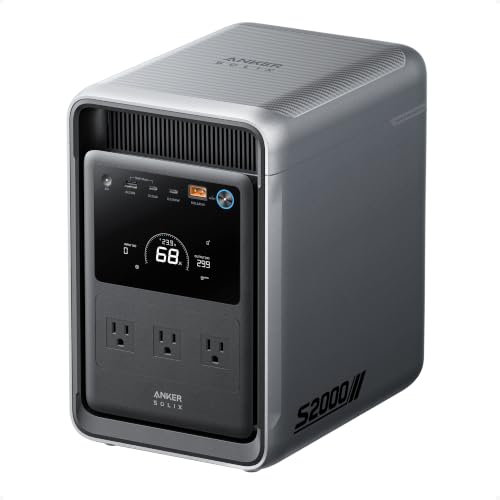
- 2,010Wh capacity with low 6W idle draw for longer runtime
- 1,500W output and 3,000W peak for home essentials
- 35.7 lb body is compact and easier to move
Best For: People who want an efficient, lighter backup station for essentials
Compact Fast-Charging Backup
Jackery Explorer 1000 v2 Portable Power Station

- 1,070Wh capacity with 1,500W output
- 1-hour emergency charging via app
- 23.8 lb build with foldable handle
Best For: Campers, RV users, and emergency backup needs
High-Capacity Home Backup
Anker SOLIX F1500 Portable Power Station

- 1,536Wh battery with 1,800W output
- Powers up to 13 devices at once
- 80% recharge in 1.4 hours with solar
Best For: Home backup and larger emergency power needs
Ultralight Winter-Ready Backup
BLUETTI Elite 30 V2 Portable Power Station

- Only 9.4 lbs for easy storm-time carrying
- 600W output with 1500W power lifting
- 10ms UPS and 45-minute 80% charging
Best For: Lightweight emergency backup and portable essentials
Cold-Weather Heavyweight

- 2,042.8Wh capacity with 3,000W output
- Temperature-resistant LiFePO4 battery design
- Expandable up to 24kWh for longer backup
Best For: Winter home backup and RV power with high output
Fast-Charge Compact Pick

- 1,024Wh capacity with 2,000W output
- 49-minute recharge with HyperFlash mode
- Smaller, lighter design for easy transport
Best For: Compact emergency backup and fast recharging
Balanced Backup Choice
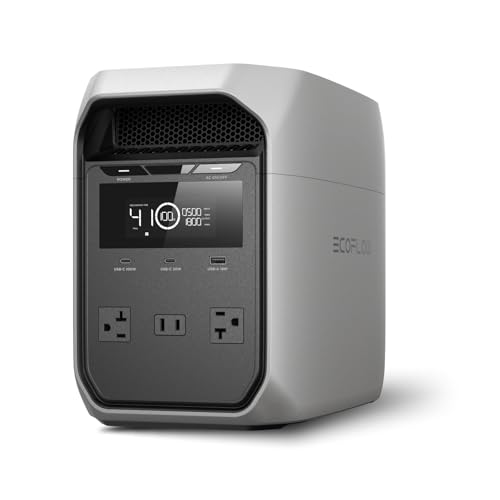
- 1,024Wh capacity and 1,800W output
- 0 to 80% charge in 45 minutes
- <10ms UPS for sensitive electronics
Best For: Everyday backup and travel power with fast charging
Winter-Ready Backup – Jackery Explorer 2000 v2 for Extreme Cold
If you need a portable power station for cold weather, the Jackery Explorer 2000 v2 is built around a low-temperature resistant bag with premium insulation and a 30W USB heating module. It’s designed to keep the power station operating down to -40°F, while still giving you a compact 2kWh-class setup for home backup, camping, and emergencies.
Best For: Users who want a winter-capable backup power station with strong capacity in a relatively compact, easy-to-carry build.
Pros:
- Low-temperature resistant bag is rated for extreme cold down to -40°F.
- 2042Wh capacity and 2200W output handle a wide range of essentials.
- Weighs 39.5 lbs, making it lighter than many bulkier 2kWh units.
- USB-C PD 100W port supports fast device charging.
Cons:
- The winter-ready setup depends on the included specialized bag.
- It only has 3 AC ports, so outlet count is modest.
- Fast solar charging still depends on compatible panel setup.
Overall, this Jackery stands out if cold-weather reliability is the priority. It combines winter protection, UPS support, and a strong power-to-size balance, making it a practical choice for users who expect freezing conditions.
Whole-Home Backup – Jackery HomePower 3000 for Essential Loads
For shoppers comparing a portable power station for cold weather and outages, the Jackery HomePower 3000 is aimed at keeping essential household loads running. With 3072Wh capacity, 3600W output, and a UL-certified UPS that switches within ≤20ms, it’s built for reliable backup when winter storms or other emergencies interrupt power.
Best For: Homeowners who want a high-capacity backup station for fridges, routers, lights, and other essentials during outages.
Pros:
- 3072Wh capacity and 3600W AC output support heavier household essentials.
- ≤20ms UPS switching helps keep critical devices running without interruption.
- Dual 100W PD ports, AC, USB, and DC outputs add useful charging flexibility.
- Recharges quickly with hybrid AC/DC, and supports solar, car, and generator input.
Cons:
- At 59.5 lbs, it’s less convenient to move often than smaller units.
- Solar charging speed depends on panel setup and conditions.
- It’s positioned more for home backup than grab-and-go portability.
This is a strong pick if your main goal is dependable indoor backup during cold-weather outages. It emphasizes capacity, UPS performance, and flexible charging over compact size, which suits emergency home use well.
Compact Emergency Pick – VTOMAN Jump 600X for Cold-Weather Travel
The VTOMAN Jump 600X is a smaller portable power station for cold weather if you need something that can also help with roadside emergencies. Its 299Wh LiFePO4 battery, car jump-start function, and regulated 12V outputs make it more travel- and vehicle-focused than a large home backup unit.
Best For: Campers, RV travelers, and drivers who want a compact power station with jump-start capability.
Pros:
- 2-in-1 design combines a portable power station with jump-start support.
- LiFePO4 battery is rated for 3,000 full cycles to 80% capacity.
- Can charge up to 9 devices at once, including USB-C PD 60W devices.
- Regulated 12V outputs suit car fridges, CPAP machines, and tire inflators.
Cons:
- 299Wh capacity is much smaller than larger home-backup stations.
- Jumper cables are sold separately.
- Best suited to lower-power gear rather than full household loads.
In short, this VTOMAN makes sense when portability and emergency versatility matter more than total capacity. It’s a practical cold-weather travel companion, especially for vehicle-based use and lighter electrical needs.
Efficient 2kWh Choice – Anker SOLIX S2000 for Winter Backup
If you want a portable power station for cold weather with a focus on efficiency and backup runtime, the Anker SOLIX S2000 is a strong contender. Its 2,010Wh battery, 1,500W output, and low 6W idle draw are designed to stretch runtime, with the brand claiming up to 35 hours of fridge backup.
Best For: Users who want a compact, efficient 2kWh-class station for home essentials and outage protection.
Pros:
- Up to 35-hour fridge backup and 6W idle draw support longer runtime.
- 1,500W continuous output and 3,000W peak output cover many essentials.
- Weighs 35.7 lbs, making it one of the lighter 2kWh options listed.
- Supports six recharge methods, including solar, AC, generator, alternator, and car input.
Cons:
- No 12V DC port, which may limit some dedicated appliance use.
- Lower output than larger home-backup units in this roundup.
- Solar input tops out at 400W, so recharge speed depends on setup.
The Anker SOLIX S2000 is a sensible pick if you value efficiency, portability, and long battery life more than raw power. For winter outages and general emergency use, it offers a balanced mix of runtime and convenience.
Compact Fast-Charging Backup – Jackery Explorer 1000 v2 Portable Power Station
If you want a portable power station for cold weather that can keep essentials running without taking up much space, the Jackery Explorer 1000 v2 is a strong all-around pick. Its 1,070Wh battery, 1,500W output, and 3,000W surge rating give it enough headroom for common emergency and camping loads, while the lightweight 23.8 lb design makes it easier to move when conditions get rough.
Best For: Campers, RV owners, and households needing compact emergency backup with fast recharge options.
Pros:
- 1,500W AC output with 3,000W surge supports fridges, AC units, and electric pots.
- 1-hour emergency charging option through the Jackery app.
- LFP battery is rated for over 4,000 cycles and 10+ years of use.
- Multiple outputs, including two USB-C ports and three pure sine wave AC ports.
Cons:
- 1-hour charging requires enabling emergency charging in the app.
- Solar charging is only compatible with Jackery solar panels.
Overall, this model stands out if you want a balance of portability, fast recovery after outages, and enough output for cold-weather essentials. It is especially appealing when you need a power station that can be moved quickly and charged back up fast between uses.
High-Capacity Home Backup – Anker SOLIX F1500 Portable Power Station
For a portable power station for cold weather that leans toward home backup, the Anker SOLIX F1500 offers a larger 1,536Wh battery and 1,800W output. That extra capacity is useful when storms or winter outages stretch on, and its rugged PowerHouse-style design makes it a practical choice for keeping several devices powered at once.
Best For: Homeowners and road-trippers who want higher capacity and multi-device power during outages.
Pros:
- 1,536Wh LiFePO4 battery provides substantial reserve power.
- 1,800W output can power up to 13 devices at once.
- Fast solar recharge can reach 80% in 1.4 hours with a 600W panel.
- Backed by a 5-year full-device warranty.
Cons:
- Heavier-duty capacity makes it less of a grab-and-go option than smaller units.
- Fastest recharge claim depends on pairing with a 600W solar panel.
In practical terms, this is the pick for users who care more about reserve power and multi-device support than ultra-light portability. If winter outages are a real concern, the larger battery and strong output make it easier to stay comfortable and connected.
Ultralight Winter-Ready Backup – BLUETTI Elite 30 V2 Portable Power Station
If you need a portable power station for cold weather that is easy to carry during storms, the BLUETTI Elite 30 V2 is built around portability and quick recovery. At just 9.4 lbs, it is one of the easiest units here to move, and its 10ms UPS switching plus fast recharge options make it useful for keeping small but critical devices online.
Best For: Lightweight backup for camping, winter storms, and small essential devices like laptops or CPAP machines.
Pros:
- Very light at 9.4 lbs, making it easy to carry in bad weather.
- 600W continuous output with 1500W power lifting for short bursts.
- 10ms UPS helps protect devices during outages.
- Charges to 80% in 45 minutes with AC power.
Cons:
- 288Wh capacity is much smaller than larger home-backup models.
- Best suited to essential devices rather than heavy appliances.
This model makes sense if you value speed and portability over big reserve capacity. For cold-weather travel or storm prep, it offers a convenient way to keep the most important electronics powered without hauling a bulky unit.
Cold-Weather Heavyweight – Jackery Explorer 2000 Plus
If you want a portable power station for cold weather that can handle serious loads, the Jackery Explorer 2000 Plus is built for big backup jobs. Its 2,042.8Wh capacity, 3,000W output, and LiFePO4 battery make it a strong fit for keeping essential appliances and gear running when temperatures drop and power becomes less reliable.
Best For: Winter home backup, RV use, and off-grid setups that need high output and expandable runtime.
Pros:
- 2,042.8Wh capacity and 3,000W output support demanding devices like air conditioners and RV equipment.
- Temperature-resistant battery design and built-in cooling system are useful for safer operation.
- Expandable from 2kWh up to 24kWh for much longer backup coverage.
- Whisper-quiet operation at 30 dB keeps noise low during indoor or campsite use.
Cons:
- Solar panels are optional, so solar charging requires extra purchases.
- Its large-capacity design is better for power than for ultra-light portability.
Overall, this is the most capable option here for buyers prioritizing winter resilience and long backup runtime. If your cold-weather plan includes high-powered appliances or extended outages, the Jackery’s capacity and expansion options make it especially compelling.
Fast-Charge Compact Pick – Anker SOLIX C1000 Gen 2
The Anker SOLIX C1000 Gen 2 is a practical portable power station for cold weather when you want quick recovery and a smaller footprint. With 1,024Wh of capacity, 2,000W output, and a 49-minute recharge mode, it is designed for fast turnaround during outages, camping trips, and other off-grid situations.
Best For: Users who want a compact emergency backup unit with fast charging and solid everyday portability.
Pros:
- Recharges in 49 minutes at 1,600W when HyperFlash mode is enabled in the app.
- 2,000W output and 10 ports can run multiple devices at once.
- 14% smaller and 11% lighter than similar models for easier carrying.
- LiFePO4 battery is rated for 4,000 cycles and 10 years of use.
Cons:
- 1,024Wh capacity is much smaller than larger backup-focused stations.
- Best charging speeds depend on app-enabled settings.
This is a strong pick if you value speed and portability more than maximum runtime. For cold-weather preparedness, its fast recharge time and UPS capability make it a smart grab-and-go backup option.
Balanced Backup Choice – EcoFlow DELTA 3 Classic
The EcoFlow DELTA 3 Classic is a balanced portable power station for cold weather if you want dependable backup without moving into a huge system. It offers 1,024Wh of capacity, 1,800W AC output, 3,600W surge, and fast charging, making it a solid fit for refrigerators, laptops, and other essentials during outages.
Best For: Home backup, camping, and RV users who want quick charging and dependable everyday power.
Pros:
- 1,800W output with 3,600W surge handles a wide range of common appliances.
- Charges from 0 to 80% in 45 minutes with X-Stream AC charging.
- <10ms UPS switch helps keep sensitive electronics running without interruption.
- LiFePO4 cells and smart battery management are built for long-term reliability.
Cons:
- Solar panel is optional, so off-grid solar use requires separate equipment.
- Capacity is moderate, so longer outages may call for more runtime planning.
For shoppers comparing portable power station for cold weather options, this model stands out for speed, UPS protection, and a practical middle-ground size. It is a well-rounded choice for keeping the essentials on during winter storms or travel stops.
How We Picked the Best Portable Power Station for Cold Weather
We looked for models with LiFePO4 batteries, dependable inverter output, useful low-temperature protection features, and enough capacity to handle winter essentials such as phones, lights, routers, CPAPs, and small heaters where appropriate. Fast charging, solar compatibility, and UPS or backup functionality also mattered because cold-weather power plans often depend on recharging quickly and using the unit reliably during outages.
Quick Comparison
In general, larger-capacity models are better for home backup and long winter storms, while smaller units make more sense for travel, day trips, and emergency kits. High-wattage units are the better fit if you need to run appliances with startup surges, while compact units are easier to carry and store in vehicles or cabins.
Key Buying Factors for a Portable Power Station for Cold Weather
Battery Chemistry and Low-Temperature Performance
LiFePO4 batteries are usually the safest long-term choice because they offer strong cycle life and stable performance. For winter use, look for low-temperature charging protection or included insulation, since charging a battery when it is too cold can reduce efficiency or cause damage.
Capacity and Output
Match watt-hours to your runtime needs and AC output to the devices you plan to power. A larger battery helps more than raw wattage if you want longer backup time, but higher inverter output is important for appliances, kitchen gear, and tools.
Charging Options
Fast wall charging is helpful before storms, and solar input is valuable for extended outages or off-grid travel. If you expect frequent winter use, prioritize a model that can recharge quickly even when daylight is limited.
Portability and Ruggedness
Cold-weather setups often involve snow, wet ground, and transport in vehicles. Handles, weight, and enclosure durability matter almost as much as total capacity, especially if you plan to move the unit between home, car, cabin, and campsite.
Who Should Buy Which Portable Power Station for Cold Weather?
If you want a compact emergency kit for short outages or vehicle use, choose a smaller 300Wh to 600Wh unit. For camping and multi-device weekend trips, a mid-size 1,000Wh-class model is usually the sweet spot. If you need serious winter backup for a fridge, internet gear, medical devices, or longer outages, go with a 2,000Wh-plus option with strong AC output and fast recharge support.
For the best Portable Power Station for Cold Weather, the right choice comes down to your runtime needs, how cold the environment gets, and whether you value portability or whole-home resilience more.