Choosing a portable GPS navigator for hiking comes down to more than just screens and specs. The right unit should stay accurate under tree cover, last all day or longer, and remain easy to use when conditions get rough.
Below, we’ve narrowed the field to 10 solid options for hikers who want dependable navigation without relying only on a phone. Whether you prioritize battery life, ruggedness, or mapping features, this roundup focuses on practical trail use.
Best 10 Portable Gps Navigator for Hiking Picks for 2026
Ultra-Light, Long-Life Trail Pick
Garmin eTrex SE GPS Handheld Navigator

- Up to 168 hours of battery life
- Multi-GNSS support for tougher tracking
- 2.2" sunlight-readable display
Best For: Hikers wanting a compact handheld with standout battery life
Return-Home Emergency Option

- Captures trips and waypoints for backtracking
- Up to 35 hours of battery life
- Rugged, waterproof, glove-friendly design
Best For: Backpackers and hikers who mainly need a simple return-to-start GPS
Value Map-and-Track Choice

- Preloaded TopoActive maps with trails
- GPS and GLONASS support
- 8 GB memory plus microSD expansion
Best For: Hikers who want a rugged handheld with topo maps and expandability
Large-Screen Premium Navigator

- 5" glove-friendly touchscreen display
- TopoActive maps with satellite imagery support
- Rugged MIL-STD 810 and IPX7 design
Best For: Hikers who want a large-screen navigator with advanced mapping
Unlimited-Battery Trail Handheld
Garmin eTrex Solar, GPS Handheld Navigator

- Unlimited battery life in sunny conditions
- Multi-band GPS for improved accuracy
- Water-resistant IPX7 build for hiking
Best For: Hikers who want long battery life and dependable trail navigation
Classic Map-Ready Trekker
Garmin eTrex 32x Rugged Handheld GPS Navigator

- Preloaded TopoActive maps for hiking routes
- GPS + GLONASS for better tracking
- 3-axis compass and barometric altimeter
Best For: Hikers who want a rugged handheld with built-in topographic maps
Large-Screen Backcountry GPS
NiesahYan 3.2" Handheld GPS Navigator

- 3.2-inch sunlight-readable display
- Multi-GNSS support for better positioning
- Up to 36 hours of rechargeable battery life
Best For: Hikers who want a larger screen and long battery life
Premium Touchscreen Trekking Pick
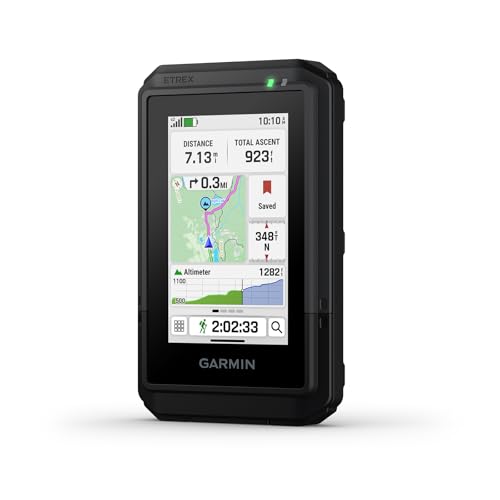
- 3" color touchscreen with easy swipe-and-zoom control
- Preloaded trails, roads, topo contours, and POIs
- Up to 130 hours battery; IP67 rugged build
Best For: Hikers who want a compact, easy-to-use GPS handheld with detailed maps and long battery life.
Ultra-Endurance No-Frills Navigator
- Up to 168 hours standard battery life
- Multi-GNSS support for tougher environments
- Sunlight-readable screen with IPX7 water resistance
Best For: Hikers who want maximum battery life and a simple, rugged handheld GPS.
Budget Track-Back Hiker Option

- 2.4" color screen with basic track-following tools
- Multi-GNSS support for difficult terrain
- No maps, but includes track record and return navigation
Best For: Hikers who need a simple, lightweight GPS for track recording and return navigation.
Ultra-Light, Long-Life Trail Pick – Garmin eTrex SE GPS Handheld Navigator
If you want a portable gps navigator for hiking that favors battery life and simplicity, the Garmin eTrex SE is built for long days off-grid. Its 2.2″ sunlight-readable screen, multi-GNSS support, and physical buttons make it a practical choice when you need dependable navigation without a lot of setup.
Best For: Hikers who want a compact handheld with excellent battery life and basic waypoint navigation.
Pros:
- Up to 168 hours of battery life in standard mode, with expedition mode extending it much further.
- Multi-GNSS support helps it track in more challenging environments than GPS alone.
- 2.2″ high-resolution display is easy to read in bright sunlight.
- Bluetooth pairing with Garmin Explore adds trip planning, wireless updates, and smart notifications.
Cons:
- AA batteries are not included.
- Smaller screen may feel limited for users who want more map viewing area.
- Mapping is tied to app pairing and compatible smartphone features for some functions.
The eTrex SE stands out for hikers who prioritize endurance, portability, and reliable handheld navigation over a large touchscreen experience. It is a straightforward backcountry tool with useful smart-app support when paired with a phone.
Return-Home Emergency Option – Bushnell BackTrack Mini GPS
Bushnell BackTrack Mini GPS Navigation, Portable Waterproof GPS for Hiking Hunting and Backpacking
Check Price On AmazonThe Bushnell BackTrack Mini is a practical portable gps navigator for hiking when you mainly need a simple way to get back to camp, the trailhead, or a saved waypoint. It uses GPS to capture your trip, works without cell coverage, and adds Bluetooth syncing for storing or sharing waypoints in the Bushnell Connect app.
Best For: Hikers, backpackers, and hunters who want a compact return-to-start GPS with basic trip data.
Pros:
- Captures trips or waypoints so you can guide back to your starting position.
- Battery lasts up to 35 hours and recharges via Micro USB.
- Rugged, waterproof design is made for trail use.
- Easy-to-read display and glove-friendly buttons improve usability outdoors.
Cons:
- Battery life is much shorter than some dedicated handheld hiking GPS units.
- Designed more for backtracking than for advanced map navigation.
- Small form factor may not suit users who want detailed route planning on-device.
This model makes sense if you want a lightweight safety tool rather than a full-featured mapping device. It is best viewed as a simple, rugged backup for getting back to where you started.
Value Map-and-Track Choice – Garmin eTrex 22x
If you want a portable gps navigator for hiking with more map support than a basic tracker, the Garmin eTrex 22x is a strong value option. It combines a sunlight-readable color display, TopoActive maps, and GPS/GLONASS support for hikers who want dependable navigation on trails and in more challenging terrain.
Best For: Hikers who want a rugged handheld with preloaded topo maps and room for extra map downloads.
Pros:
- Preloaded TopoActive maps include routable roads and trails for cycling and hiking.
- GPS and GLONASS support improves tracking in tougher environments.
- 8 GB of internal memory plus a microSD slot give you room for more maps.
- Compact, rugged handheld design with a 2.2″ sunlight-readable color display.
Cons:
- Battery life is up to 25 hours, which is far less than the eTrex SE.
- Uses AA batteries and does not include a touchscreen.
- Smaller display may not be ideal for users wanting a larger map view.
The eTrex 22x is a practical pick for hikers who want real topo mapping without stepping up to a larger premium unit. It offers a balanced mix of durability, map detail, and portability.
Large-Screen Premium Navigator – Garmin Montana 710
The Garmin Montana 710 is a more advanced portable gps navigator for hiking if you want a larger screen and richer mapping tools. Its 5″ glove-friendly touchscreen, included TopoActive maps, downloadable satellite imagery, and Wi-Fi-enabled map access make it well suited to hikers who prefer a bigger, more versatile navigation display.
Best For: Hikers who want a rugged large-screen navigator with premium mapping and app support.
Pros:
- 5″ glove-friendly touchscreen offers a much larger viewing area than compact handhelds.
- Included TopoActive maps plus optional map and chart downloads expand navigation options.
- Rugged build is rated to MIL-STD 810 and IPX7.
- Expanded 32 GB memory, Wi-Fi, and Garmin Explore support add flexibility for trip planning and map management.
Cons:
- It is heavier and larger than smaller hiking handhelds.
- Some premium mapping content and accessories are sold separately.
- Battery life in GPS mode is up to 24 hours, which is modest for a larger unit.
The Montana 710 is the most capable and screen-forward option in this group, especially for hikers who value visibility and map depth. It is less about minimal carry weight and more about a feature-rich navigation experience.
Unlimited-Battery Trail Handheld – Garmin eTrex Solar, GPS Handheld Navigator
If you want a portable gps navigator for hiking that prioritizes long outings and simple reliability, the Garmin eTrex Solar is built around endurance. Its sunlight-readable 2.2-inch display, multi-band GPS, and physical-button control make it a practical pick for trail use, especially when you may be out for hours at a time.
Best For: Hikers who want extended battery life, solid satellite accuracy, and a compact handheld they can trust in bright conditions.
Pros:
- Unlimited battery life in sunny conditions, or up to 200 hours without solar charging
- Multi-band GPS helps improve positional accuracy
- Water-resistant design rated to IPX7 for hiking in wet weather
- Digital compass gives an accurate heading even when stationary
Cons:
- 2.2-inch screen is compact compared with larger handheld GPS units
- North America map coverage may be limiting if you need broader regions
- Best features work with the Garmin Explore app on a compatible smartphone
Overall, this is a strong choice for hikers who care more about dependable navigation and battery life than screen size or advanced touch controls. If long trail days are the priority, the eTrex Solar stands out.
Classic Map-Ready Trekker – Garmin eTrex 32x Rugged Handheld GPS Navigator
The Garmin eTrex 32x is a straightforward portable gps navigator for hiking if you want a rugged handheld with preloaded maps and proven core features. Its sunlight-readable color display, TopoActive maps, and support for GPS plus GLONASS make it a practical companion for day hikes and route planning.
Best For: Hikers who want a rugged, map-ready handheld with barometric and compass tools in a compact form.
Pros:
- Preloaded TopoActive maps with routable roads and trails for hiking
- GPS and GLONASS support for tougher tracking environments
- 3-axis compass and barometric altimeter add useful trail data
- MicroSD slot and 8 GB internal memory support map downloads
Cons:
- Battery life is up to 25 hours in GPS mode, which is shorter than some rivals
- Uses 2 AA batteries instead of a rechargeable pack
- 2.2-inch screen is compact for users who want more on-screen map detail
For hikers who want a familiar, durable GPS with built-in mapping and classic outdoor tools, the eTrex 32x remains a practical option. It is especially appealing if you prefer replaceable batteries and a simple handheld layout.
Large-Screen Backcountry GPS – NiesahYan 3.2" Handheld GPS Navigator
This handheld GPS is a compelling portable gps navigator for hiking if you want a larger sunlight-readable screen and modern satellite support. With a 3.2-inch display, multi-GNSS compatibility, and preloaded USA Topo maps, it is aimed at hikers who want a compact navigator with more visible map space and practical trail tools.
Best For: Hikers who want a bigger display, multi-satellite support, and rechargeable battery life for trail use.
Pros:
- 3.2-inch sunlight-readable screen is larger than many handheld GPS units
- Multi-GNSS support includes GPS, Galileo, BeiDou, and QZSS
- Up to 36 hours of battery life on a full charge
- IP66 water-resistant design and physical buttons suit rough conditions
Cons:
- Brand ecosystem is less established than long-running GPS names
- Windows operating system support may be less relevant for some users
- Map coverage is limited to preloaded USA Topo maps unless you add more data
For hikers who value screen size, battery life, and broad satellite compatibility, this model offers a well-rounded feature set. It is a smart pick if you want a modern handheld without moving up to a larger dedicated navigation device.
Premium Touchscreen Trekking Pick – Garmin eTrex Touch
If you want a portable gps navigator for hiking with modern map handling and long runtime, the Garmin eTrex Touch is built for hikers who prefer a compact touchscreen over button-only controls. It combines preloaded routable trails and roads with topo details, multi-band GPS, and a rugged IP67 body for dependable use on the trail.
Best For: Hikers who want a compact, easy-to-use GPS handheld with detailed maps and long battery life.
Pros:
- 3″ color touchscreen makes swiping, zooming, and route viewing simple.
- Preloaded TopoActive maps show trails, terrain contours, summits, parks, and more.
- Up to 130 hours of battery life in all satellite systems with SatIQ, and up to 650 hours in expedition mode.
- IP67 rating and multi-band GPS add durability and accuracy for rugged outdoor use.
Cons:
- Outdoor Maps+ premium content requires a separate paid plan.
- Touchscreen design may not appeal to users who prefer physical buttons.
Overall, this is the most feature-rich hiking pick here for buyers who want mapping depth, strong battery life, and a compact handheld that is easy to operate in the field.
Ultra-Endurance No-Frills Navigator – Garmin eTrex SE
The Garmin eTrex SE is a practical portable gps navigator for hiking if your priority is battery life and straightforward field use rather than a color touchscreen. Its sunlight-readable display, multi-GNSS support, and simple button controls make it a reliable choice for long days outdoors and changing conditions.
Best For: Hikers who want maximum battery life and a simple, rugged handheld GPS.
Pros:
- Up to 168 hours of battery life in standard mode and up to 1,800 hours in expedition mode.
- Multi-GNSS support includes GPS, GLONASS, Galileo, BeiDou, and QZSS for tougher environments.
- Sunlight-readable 2.2″ display is easy to see outdoors.
- IPX7 water resistance and digital compass support practical hiking use.
Cons:
- Monochrome display is less advanced than color touchscreen models.
- Requires 2 AA batteries, which are not included.
- Renewed unit with a shorter 90-day warranty.
This is the best pick for hikers who value endurance, simplicity, and dependable positioning over premium mapping features or a modern interface.
Budget Track-Back Hiker Option – A6 Handheld GPS for Hiking
The A6 is a compact portable gps navigator for hiking aimed at users who want basic navigation and track recording in a lightweight handheld. It offers multi-GNSS support, a color screen, and simple back-to-start guidance, but it does not include maps, so it fits hikers who are comfortable following tracks rather than detailed cartography.
Best For: Hikers who need a simple, lightweight GPS for track recording and return navigation.
Pros:
- Bright 2.4″ color screen makes track following easier.
- Multi-GNSS support can improve positioning in forests, urban canyons, and steep terrain.
- Track recording, waypoints, and back-to-start guidance add useful hiking basics.
- USB-C rechargeable battery offers up to 20 hours of continuous use.
Cons:
- No maps are included.
- Battery life is much shorter than Garmin alternatives.
- Requires clear sky satellite acquisition for best accuracy.
This model makes sense if you want a straightforward hiking GPS with core tracking tools at a simpler spec level, but it is not the right choice if you need built-in maps or all-day endurance for longer treks.
How We Picked the Best Portable Gps Navigator for Hiking
We focused on the features that matter most on the trail: reliable satellite support, strong battery life, weather resistance, readability in bright light, and simple controls. We also considered map options, portability, and whether a model feels suited to day hikes, backpacking, or more advanced route planning.
Quick Comparison
In this category, the main tradeoffs are usually between simplicity and mapping depth. Basic handheld units tend to be smaller, lighter, and easier to carry, while higher-end models may offer larger touchscreens, richer maps, and better route visibility. For a Portable Gps Navigator for Hiking, the best choice depends on how much detail you want versus how much bulk you can tolerate.
Key Buying Factors for Portable Gps Navigator for Hiking
Battery Life
Look for runtimes that match your longest expected outing. If you hike overnight or in remote areas, prioritize extended battery performance or replaceable batteries. Solar-assisted and power-efficient models can be especially useful for multi-day trips.
Durability and Weather Resistance
A hiking GPS should be built for drops, rain, dust, and temperature swings. Rugged housings and water resistance are essential if you plan to use it regularly in unpredictable conditions.
Screen Visibility
Sunlight-readable displays matter more than high resolution alone. If you often hike in bright alpine or desert environments, choose a unit that stays clear without draining battery too quickly.
Navigation and Mapping
Some hikers need only breadcrumb-style guidance, while others want topographic maps, routable trails, and saved waypoints. Think about whether you’ll use the device for simple wayfinding or for more complex trip planning.
Satellite Support and Accuracy
Multi-GNSS support can improve reliability in forests, canyons, and mountainous terrain. If you frequently hike in challenging reception areas, this feature is worth prioritizing.
Who Should Buy Which Portable Gps Navigator for Hiking?
Buy a compact, battery-focused model if you want a lightweight backup to your phone or a simple navigator for day hikes. Choose a map-rich touchscreen unit if you plan longer backcountry trips and want easier route review on-device. If your top concern is maximum endurance, look for solar or extra-long battery options. For budget-minded hikers, a basic rugged handheld can still provide dependable navigation without unnecessary extras.
Overall, the best Portable Gps Navigator for Hiking is the one that matches your terrain, trip length, and comfort level with navigation tools. Prioritize the features you’ll actually use, and you’ll end up with a device that feels dependable every time you head out.