When maps, towers, and signal bars disappear, the right off grid navigation device can keep you oriented, connected, and safer in remote country.
This roundup focuses on practical options for hikers, overlanders, hunters, and backcountry travelers who need navigation, location sharing, and emergency communication beyond cellular coverage.
Best 10 Off Grid Navigation Device Picks for 2026
Off-Grid LoRa Communicator
Trekker Delta ATAK Meshtastic GPS Radio

- LoRa messaging and GPS sharing work without cell towers
- ATAK and Meshtastic support helps coordinate teams
- 36+ hour battery and no subscription fees
Best For: Off-roaders and field teams needing off-grid communication and location sharing
Trail-Back GPS
BackTrack Mini Waterproof Hiking GPS

- Captures trips and waypoints for backtracking
- Waterproof and rugged for trail use
- Bluetooth syncs with the Bushnell Connect app
Best For: Hikers and hunters who need a simple way back to camp or the trailhead
Satellite Messenger Bundle
inReach Messenger Off-Grid Communicator

- Two-way satellite texting with active subscription
- SOS, weather, and location sharing features
- Up to 28 days of battery life
Best For: Remote users who need satellite communication and emergency support
Rugged Overland Navigator
Garmin Tread 2 8-Inch Trail GPS

- 8-inch rugged touchscreen built for harsh conditions
- Preloaded topo maps plus trail and land info
- Subscription-free satellite imagery download over Wi‑Fi
Best For: Overlanders and truck or SUV drivers who want a rugged map-rich navigator
Satellite Messenger
ZOLEO Two-Way SMS & SOS Communicator
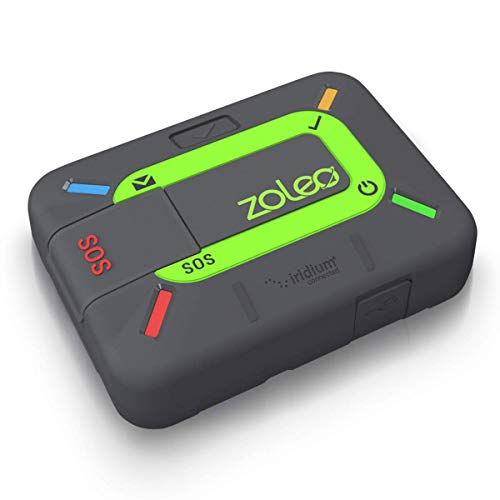
- Uses Iridium satellite, cellular, or Wi‑Fi
- Includes SOS, check-ins, and GPS location sharing
- IP68-rated with 200+ hours battery life
Best For: Users who want affordable satellite messaging and emergency backup
Standalone LoRa Navigator
Ranger Meshtastic Device With Offline Maps

- No phone or SIM needed for use
- Preloaded U.S. maps on 32GB SD card
- Built-in GPS, keyboard, and touchscreen
Best For: Teams and outdoor users needing standalone off-grid messaging and maps
Rugged Satellite Link
Motorola Defy Satellite Link Communicator

- Two-way satellite SMS with SOS assist
- Rugged IP68 unit with 4-day standby
- Works with iOS and Android smartphones
Best For: People wanting compact emergency satellite messaging with phone pairing
Satcom Touchscreen Pick

- Two-way text, voice, and photo messaging
- Interactive SOS with Garmin Response support
- Up to 350 hours battery life
Best For: Remote travelers who want compact satellite communication
Compact Off-Grid Communicator
Garmin inReach Mini 3 Plus Rugged

- Iridium satellite messaging with SOS
- LiveTrack, weather, and trip planning tools
- Rugged IP67 touchscreen design
Best For: Remote explorers who want navigation support and emergency comms
Essential Off-Grid Bundle

- Global messaging and interactive SOS
- TracBack routing and digital compass
- Lightweight rugged handheld design
Best For: Hikers and hunters who want essential off-grid support
Off-Grid LoRa Communicator – Trekker Delta ATAK Meshtastic GPS Radio
If you want an off grid navigation device that also keeps your group in contact, the Trekker Delta is built for exactly that job. It combines LoRa messaging, GPS location sharing, and ATAK/Meshtastic compatibility in a handheld unit that works without cell towers, Wi‑Fi, or satellite service. This is a practical pick for field teams, off-road use, and emergency backup communication.
Best For: Off-roaders, tactical teams, and emergency responders who need simple off-grid messaging plus GPS sharing.
Pros:
- LoRa radio supports secure text messaging and GPS sharing without cell service, Wi‑Fi, or satellites
- ATAK and Meshtastic compatibility for team tracking and tactical coordination
- Battery life is rated at over 36 hours of continuous use and 100+ hours standby
- No subscription fees or monthly contracts
Cons:
- Range is limited to about 1–3 miles urban and 3–5 miles rural
- Focused more on communication than detailed map navigation
- Best performance depends on mesh-networked devices in the field
The Trekker Delta makes sense if your priority is staying connected off-grid rather than running full routing maps. Its combination of GPS, LoRa, and long battery life makes it a capable field communication tool.
Trail-Back GPS – BackTrack Mini Waterproof Hiking GPS
Bushnell BackTrack Mini GPS Navigation, Portable Waterproof GPS for Hiking Hunting and Backpacking
Check Price On AmazonThe Bushnell BackTrack Mini is a straightforward off grid navigation device for hikers, backpackers, and hunters who mainly need help finding their way back. It captures your trip or waypoint with GPS so you can return to your basecamp or trailhead, and it adds waterproof construction, long battery life, and a simple button layout that works with gloves.
Best For: Hikers, backpackers, and hunters who want a simple return-to-start GPS tool.
Pros:
- GPS captures trips and waypoints for backtracking to your starting point
- Rugged, waterproof build for trail and field use
- Up to 35 hours of battery life
- Bluetooth sync to the Bushnell Connect app for viewing and sharing trips
Cons:
- Not a full-featured mapping navigator
- Screen size is small at 2.25 inches
- Depends on smartphone app syncing for trip management
This is a good fit if you want a compact GPS companion rather than a complex navigation system. Its simplicity, waterproof design, and return-to-basecamp function make it appealing for basic off-grid use.
Satellite Messenger Bundle – inReach Messenger Off-Grid Communicator
The Garmin inReach Messenger is an off grid navigation device for users who need communication, location sharing, and emergency support beyond cell coverage. It uses two-way satellite messaging with an active subscription, works with the Garmin Messenger app, and adds SOS, weather, and TracBack features for longer trips where staying reachable matters.
Best For: Remote travelers who want satellite messaging, SOS, and location sharing with broad coverage.
Pros:
- Two-way global texting works even without cellular coverage, with an active satellite subscription
- Interactive SOS can alert Garmin coordination services in an emergency
- Location sharing, group messaging, and threaded conversations are supported
- Up to 28 days of battery life between recharges
Cons:
- Requires an active satellite subscription
- Not a dedicated map-heavy navigation unit
- Best features rely on pairing with the Garmin Messenger smartphone app
If your off-grid priority is dependable communication rather than onboard mapping, the inReach Messenger is a strong option. It combines satellite messaging, SOS, and weather tools in a compact rugged package.
Rugged Overland Navigator – Garmin Tread 2 8-Inch Trail GPS
The Garmin Tread 2 Overland Edition is a full-size off grid navigation device for vehicles that need rugged turn-by-turn guidance on unpaved roads and trails. It adds preloaded topo maps, public land info, campground data, and downloadable satellite imagery, making it a strong choice for overland travel where map detail and durability matter.
Best For: Overlanders, RVs, SUVs, and trucks that need rugged, map-rich trail navigation.
Pros:
- 8-inch ultrabright touchscreen is glove-friendly and built for harsh conditions
- Turn-by-turn trail navigation with OpenStreetMap and U.S. Forest Service map content
- Preloaded topographic maps, land info, campgrounds, and snow trails
- Subscription-free satellite imagery can be downloaded over Wi‑Fi
Cons:
- Battery life is only rated at about 6 hours
- Some premium map features require Outdoor Maps+ subscription
- Group ride live location features depend on smartphones and cellular connections
This is the most navigation-focused option in the group and the best match if you want a rugged dashboard unit for vehicle travel. It trades portability for a larger display and much richer mapping tools.
Satellite Messenger – ZOLEO Two-Way SMS & SOS Communicator
If you want an off grid navigation device companion that keeps you reachable past cell coverage, ZOLEO is built for practical backcountry communication. It uses the lowest-cost available connection through satellite, cellular, or Wi‑Fi, so you can send texts, emails, check-ins, and GPS locations from remote areas with a smartphone.
Best For: Hikers, campers, boaters, and travelers who want affordable satellite messaging with SOS backup.
Pros:
- Two-way global messaging over Iridium satellite, cellular, or Wi‑Fi
- Unlimited check-ins included in the plan, plus assigned SMS number and email
- SOS alerting with GPS location and 24/7 emergency monitoring
- Rugged IP68 build with over 200 hours of battery life
Cons:
- Requires a service plan, with monthly airtime starting at $20
- Works through a smartphone rather than as a standalone map device
ZOLEO is a strong choice if your priority is dependable off-grid contact rather than onboard routing tools. It focuses on messaging, location sharing, and emergency support, which makes it especially useful for people who already carry a phone and want a durable satellite link.
Standalone LoRa Navigator – Ranger Meshtastic Device With Offline Maps
The Ranger is a true off grid navigation device for people who want messaging and map access without depending on a phone or SIM. It combines Meshtastic LoRa communication with integrated GPS and a 32GB SD card preloaded with U.S. maps up to zoom level 13, giving you a self-contained option for remote coordination and navigation.
Best For: Hikers, field teams, volunteers, and preppers who need standalone off-grid messaging and offline U.S. maps.
Pros:
- No phone or SIM required for messaging, channel management, or GPS data
- Built-in keyboard and touchscreen make it easy to use on the device itself
- 32GB SD card includes preloaded U.S. maps for offline navigation
- Portable design with LoRa, integrated GPS, and USB-C charging
Cons:
- Battery life is limited to about 8 hours of active use
- Maps are U.S.-focused, which may not suit international users
The Ranger stands out for buyers who want an actual standalone off-grid tool rather than a phone accessory. Its strength is self-sufficiency: messaging, GPS, and offline mapping are all available on the device, which makes it well suited to remote field use.
Rugged Satellite Link – Motorola Defy Satellite Link Communicator
The Motorola Defy Satellite Link is a compact off grid navigation device companion for anyone who needs satellite messaging and emergency check-ins when normal coverage drops out. It pairs with compatible iOS or Android smartphones and adds two-way satellite SMS, coordinate sharing, and SOS assist through a rugged handheld unit.
Best For: Off-shore travelers, remote adventurers, and anyone who wants a compact satellite communicator with SOS support.
Pros:
- Two-way satellite-enabled messaging with check-in and SOS functions
- Works with compatible iOS and Android smartphones via app and Bluetooth
- Rugged IP68 design with up to 4 days of standby battery life
- Can work up to 75 miles offshore in coverage map areas
Cons:
- Requires a service plan, starting at $19.99 per month
- Not a standalone navigation device; it depends on a smartphone for use
This is a good fit if you want a lightweight satellite link for safety rather than a full mapping platform. It emphasizes emergency contact, check-ins, and reliable coverage, making it a practical add-on for travel and outdoor use.
Satcom Touchscreen Pick – Garmin inReach Mini 3 Plus
If you need an off grid navigation device that also keeps you in touch, the Garmin inReach Mini 3 Plus is built for remote travel and fieldwork. It uses the Iridium satellite network for global messaging, supports two-way text, voice, and photo sharing through the Garmin Messenger app, and adds interactive SOS plus LiveTrack for location sharing when cell coverage disappears.
Best For: Hikers, travelers, and field professionals who want compact satellite communication with emergency support.
Pros:
- Global satellite messaging over the Iridium network with two-way text, voice, and group messages
- Interactive SOS connects to Garmin Response, a 24/7 staffed emergency coordination center
- Rugged IP67 design with a scratch-resistant color touchscreen
- Up to 350 hours of battery life in 10-minute tracking mode
Cons:
- Photo sending requires pairing with a compatible smartphone and the Garmin Messenger app
- Some advanced features depend on app integration and satellite subscription
Overall, this is a strong pick if you want a compact communicator that does more than basic SOS. It is especially practical for multi-day trips where battery life, weather resistance, and reliable check-ins matter most.
Compact Off-Grid Communicator – Garmin inReach Mini 3 Plus Rugged
The Garmin inReach Mini 3 Plus fits well if you want an off grid navigation device with modern messaging and location tools in a small, rugged package. It combines satellite texting, voice and photo messaging, interactive SOS, and LiveTrack sharing, while also pairing with the Garmin Explore app for trip planning, weather, navigation, and activity recording.
Best For: Users who want a compact satellite communicator with navigation and planning features for remote trips.
Pros:
- Global Iridium satellite coverage for messaging without cell service
- Interactive SOS with location data sent to Garmin Response
- LiveTrack sharing plus weather reports and forecast requests
- Rugged, scratch-resistant touchscreen with IP67 water rating
Cons:
- Photo messaging requires a compatible smartphone and Garmin Messenger app
- Satellite subscription is required for core communication features
This model stands out for buyers who want a blend of emergency communication and trip support rather than a basic tracker. The compact size and long battery life make it a practical companion for wooded, remote, and harsh environments.
Essential Off-Grid Bundle – Garmin inReach Mini 2 Bundle
For shoppers looking for an off grid navigation device focused on the essentials, the Garmin inReach Mini 2 delivers compact satellite messaging, SOS, and location sharing in a rugged handheld format. It uses global Iridium coverage, includes TracBack routing for retracing your path, and adds a digital compass plus weather access for basic backcountry support.
Best For: Hikers and hunters who want a lightweight satellite communicator with simple navigation aids.
Pros:
- Two-way messaging and interactive SOS through the Iridium satellite network
- TracBack routing helps guide you back along your original route
- Digital compass and weather updates add useful off-grid navigation support
- Very compact, rugged, and water-resistant with long battery life
Cons:
- Monochrome display is less feature-rich than touchscreen models
- Core satellite use requires an airtime subscription
This is the most streamlined option in the group, which makes it appealing if you want portability over extras. The bundle adds charging accessories, but the device itself is best suited to users who value dependable messaging, SOS, and route backtracking in a small package.
How We Picked the Best Off Grid Navigation Device
We prioritized devices that solve real off-grid problems: reliable positioning, clear messaging or SOS capabilities, durable construction, and ease of use in bad weather or low-signal environments. We also favored models that fit different travel styles, from compact satellite communicators to larger dedicated navigators.
Quick Comparison
If you want the lightest option, compact satellite communicators are easier to pack and carry. If you need mapping and route planning on a larger screen, a rugged dedicated navigator makes more sense. If your trips involve a team, look for shared location, group messaging, or mesh-network support. The best Off Grid Navigation Device is the one that matches your route, communication needs, and power budget.
Key Buying Factors for an Off Grid Navigation Device
Navigation Versus Communication
Some products are built mainly for GPS guidance and offline maps, while others focus on messaging, SOS alerts, and location sharing. Decide whether you need full navigation or dependable communication first.
Satellite, LoRa, or Offline Maps
Satellite devices are strongest for remote messaging and emergency alerts. LoRa and mesh-based tools can work well for local group coordination, but their range and usefulness depend on your setup. Offline maps are essential if you want turn-by-turn context without cellular service.
Battery Life and Power
Long trips demand efficient batteries, USB charging, and realistic standby times. For multi-day use, choose a device that won’t force constant recharging or carry a backup power plan.
Durability and Usability
Look for water resistance, glove-friendly controls, readable screens, and a layout you can operate quickly when cold, tired, or moving. A rugged Off Grid Navigation Device should be easy to trust under pressure.
Subscriptions and Total Cost
Many satellite communicators require an active plan. Compare hardware cost, monthly service fees, and any map or accessory expenses before you buy.
Who Should Buy Which Off Grid Navigation Device?
Backpackers and solo hikers often do best with compact, lightweight communicators. Overlanders and expedition travelers may prefer larger all-in-one navigators with robust mapping. Hunters, remote workers, and group adventurers should consider devices that support team messaging, shared location, or mesh communication.
If your priority is emergency contact from deep backcountry terrain, choose a satellite communicator. If your priority is route awareness and terrain management, choose a navigation-first model with offline maps. In many cases, the best setup is a compact communicator paired with a phone or dedicated mapping app for backup redundancy.