Choosing a handheld GPS for backcountry travel comes down to reliability, battery life, and how easy it is to navigate when the trail disappears.
Below, we focus on the features that matter most for remote hiking, camping, and off-grid navigation so you can pick the right unit with confidence.
Best 10 Handheld Gps for Backcountry Picks for 2026
Longest-Run Battery Pick
Garmin eTrex SE GPS Handheld Navigator

- Up to 168 hours standard battery life
- Multi-GNSS support for tougher environments
- IPX7 water resistance and Bluetooth with Garmin Explore
Best For: Backpackers who need a simple GPS with huge battery life
Satellite Safety Pick
Spot Gen 4 Satellite GPS Messenger

- Sends location updates beyond cell service
- SOS button for emergency communication
- Subscription required for satellite features
Best For: Remote hikers who want tracking and emergency messaging
Map-Ready Value Pick
Garmin eTrex 22x Rugged Handheld GPS

- Preloaded TopoActive maps with trails and roads
- GPS and GLONASS support for tougher terrain
- 8 GB storage plus microSD expansion
Best For: Hikers who want affordable mapping and reliable basics
High-Accuracy Trail Pick
Garmin GPSMAP 65s Handheld GPS
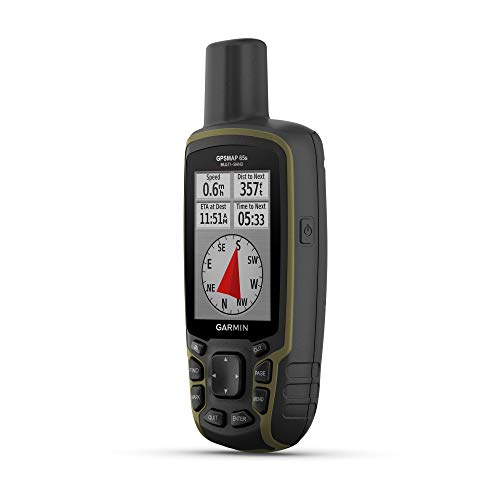
- Multi-band GNSS for tougher terrain
- 3-axis compass and barometric altimeter
- 2.6-inch display with TopoActive mapping
Best For: Backcountry users who want the most accurate navigation tools
Rugged Trail Choice

- Sunlight-readable 2.2" color display
- GPS + GLONASS support for tougher terrain
- Up to 25 hours of battery life
Best For: Hikers and backpackers needing a compact, trail-ready GPS
Precision Navigator
Garmin GPSMAP 65 Multi-Band Handheld

- Expanded GNSS with multi-band technology
- 2.6" sunlight-readable color display
- TopoActive mapping plus public land map
Best For: Users needing stronger positioning in dense trees and steep terrain
Large-Screen Adventure Pick
Garmin Montana 710 Touchscreen GPS

- 5" glove-friendly touchscreen
- MIL-STD 810 and IPX7 rugged build
- 32 GB memory with downloadable maps
Best For: Backcountry travelers who want a big screen and rugged versatility
Compact No-Map Navigator

- 2.4" color screen in a compact body
- Multi-GNSS support for tougher terrain
- Up to 20 hours rechargeable battery life
Best For: Lightweight backcountry tracking without maps
Long-Life Everyday Navigator
- Up to 168 hours, or 1,800 hours expedition mode
- Bluetooth works with Garmin Explore app
- Multi-GNSS and digital compass support
Best For: Long trips where battery life matters most
Topo Map Trail Guide

- Preloaded USA Topo maps and 32 GB storage
- 3.2" sunlight-readable screen with buttons
- Up to 36 hours of rechargeable battery life
Best For: Map-based hiking and camping navigation
Longest-Run Battery Pick – Garmin eTrex SE GPS Handheld Navigator
If you want a handheld gps for backcountry use that prioritizes battery life and simplicity, the Garmin eTrex SE is built for long days far from town. The sunlight-readable 2.2-inch screen, multi-GNSS support, and IPX7 water resistance make it a practical companion when conditions are rough and charging options are limited.
Best For: Hikers and backpackers who want a straightforward GPS with exceptional battery life and dependable satellite coverage.
Pros:
- Up to 168 hours of battery life in standard mode, with up to 1,800 hours in expedition mode
- Multi-GNSS support helps in more challenging environments than GPS alone
- Sunlight-readable 2.2-inch display is easy to see outdoors
- Bluetooth pairing with Garmin Explore adds wireless updates, trip planning, and smart notifications
Cons:
- Uses 2 AA batteries, which are not included
- Smaller 2.2-inch screen is basic compared with larger handhelds
- No preloaded topo map details were listed in the supplied notes
Overall, the eTrex SE is a strong pick if endurance matters more than advanced mapping features. It keeps the focus on reliable navigation, weather resistance, and all-day-to-multi-day power for backcountry trips.
Satellite Safety Pick – Spot Gen 4 Satellite GPS Messenger
A handheld gps for backcountry travel is not always just about finding your way—sometimes it is about staying reachable when cell service disappears. The Spot Gen 4 is a satellite GPS messenger designed to share location updates, let others know you’re okay, and trigger SOS alerts when you need help.
Best For: Solo travelers and remote adventurers who want satellite messaging and emergency SOS capabilities.
Pros:
- Can send GPS coordinates and tracking updates beyond cell towers
- SOS button provides a direct emergency communication option
- Works for hiking, camping, and other outdoor activities
- Comes with strap, carabiner, USB cable, batteries, and quick start guide
Cons:
- Subscription is required
- Not a traditional map-focused handheld GPS navigator
- Best suited to communication and tracking rather than detailed route planning
If your priority is peace of mind in remote terrain, the Spot Gen 4 fills a different role than a standard handheld map GPS. It is most appealing when emergency contact and location sharing matter as much as navigation.
Map-Ready Value Pick – Garmin eTrex 22x Rugged Handheld GPS
For buyers searching for a practical handheld gps for backcountry trips, the Garmin eTrex 22x offers a balanced mix of mapping, portability, and durability. Its sunlight-readable color display, preloaded TopoActive maps, and support for GPS and GLONASS make it a sensible choice for hiking routes and rugged terrain.
Best For: Budget-minded hikers who want preloaded topo maps and dependable basic navigation.
Pros:
- Preloaded TopoActive maps with routable roads and trails
- GPS and GLONASS support helps in more challenging environments
- 8 GB of internal memory plus microSD support for map downloads
- Compact, rugged handheld design with a sunlight-readable color display
Cons:
- Battery life is rated at up to 25 hours in GPS mode, shorter than some rivals
- No touchscreen; button-only control may feel dated to some users
- Smaller 2.2-inch display limits on-device map viewing space
The eTrex 22x is a solid middle-ground option if you want real maps without stepping up to a larger, more expensive unit. It is especially appealing for hikers who value proven Garmin navigation in a simple package.
High-Accuracy Trail Pick – Garmin GPSMAP 65s Handheld GPS
If you want a handheld gps for backcountry navigation in steep, wooded, or otherwise difficult terrain, the Garmin GPSMAP 65s is built for accuracy. Its multi-band technology, expanded GNSS support, and ABC sensors are aimed at delivering better positioning when trails are hard to follow and conditions are less forgiving.
Best For: Users who need higher-accuracy navigation features for challenging backcountry terrain.
Pros:
- Multi-band technology and expanded GNSS support for challenging locations
- 3-axis compass and barometric altimeter add useful field navigation tools
- Large 2.6-inch sunlight-readable color display
- Includes routable TopoActive mapping and U.S. federal public land map
Cons:
- Battery life is rated at up to 16 hours, which is shorter than some alternatives
- More feature-rich than basic hikers may need
- Requires a compatible smartphone for Garmin Explore app features
The GPSMAP 65s is the strongest fit when accuracy and field tools matter more than runtime. It is a compelling choice for demanding routes where better satellite support can make navigation easier and more confident.
Rugged Trail Choice – Garmin eTrex 32x Handheld GPS
If you want a handheld gps for backcountry travel that keeps things simple and dependable, the Garmin eTrex 32x is built around core navigation essentials. Its sunlight-readable 2.2″ color display, preloaded Topo Active maps, and support for GPS plus GLONASS make it a practical pick for hiking and cycling routes where battery life and basic reliability matter more than extra screen size.
Best For: Hikers and backpackers who want a compact, rugged GPS with strong battery life and trail-focused mapping.
Pros:
- Preloaded Topo Active maps include routable roads and trails for cycling and hiking.
- GPS and GLONASS support helps in tougher environments than GPS alone.
- 3-axis compass and barometric altimeter add useful backcountry navigation tools.
- Up to 25 hours of battery life in GPS mode with 2 AA batteries.
Cons:
- 2.2″ screen is compact compared with larger handhelds.
- Designed for function over advanced connectivity features.
- Best suited to users comfortable with a smaller display and button-style navigation.
For buyers focused on a straightforward backcountry navigator, the eTrex 32x offers a balanced mix of portability, map support, and battery endurance. It is a solid everyday choice when you want reliable trail guidance without a lot of extra complexity.
Precision Navigator – Garmin GPSMAP 65 Multi-Band Handheld
For a handheld gps for backcountry use where accuracy matters, the Garmin GPSMAP 65 stands out with expanded GNSS support and multi-band technology. Its 2.6″ sunlight-readable color display, TopoActive mapping, and button-operated layout make it a strong option for demanding terrain such as forests with dense trees, steep country, and other challenging navigation environments.
Best For: Users who prioritize better positioning accuracy in challenging backcountry conditions.
Pros:
- Expanded GNSS support and multi-band technology are designed for improved accuracy.
- 2.6″ sunlight-readable display is easy to view outdoors.
- Includes routable TopoActive mapping and U.S. federal public land map.
- Compatible with Garmin Explore for managing tracks, routes, and waypoints.
Cons:
- Battery life is rated at 16 hours, which is shorter than some alternatives.
- Button-based interface may feel less modern than touchscreen models.
- Uses a smaller screen than large-format handhelds.
The GPSMAP 65 is a smart buy if your priority is getting a more capable signal and usable map data in difficult terrain. It trades some battery life and screen size for navigation performance that serious backcountry users will appreciate.
Large-Screen Adventure Pick – Garmin Montana 710 Touchscreen GPS
If you prefer a handheld gps for backcountry trips with a bigger interface, the Garmin Montana 710 delivers a 5″ glove-friendly touchscreen and a rugged build rated to MIL-STD 810 and IPX7. It comes with TopoActive maps, expanded 32 GB memory, satellite imagery, and support for the Garmin Explore app, making it a flexible choice for longer expeditions and map-heavy planning.
Best For: Backcountry travelers who want a large touchscreen, rugged construction, and expanded mapping options.
Pros:
- Large 5″ glove-friendly touchscreen is easy to view and use.
- Rugged MIL-STD 810 and IPX7 construction suits harsh conditions.
- 32 GB memory and downloadable maps support deeper trip planning.
- ABC sensors, satellite imagery, and Garmin Explore compatibility add versatility.
Cons:
- Larger size and 14.5-ounce weight make it less compact than smaller handhelds.
- Some maps and accessories are sold separately.
- Battery life is strong, but expedition mode is only available between charges with the included pack.
The Montana 710 is best when screen space, map detail, and rugged versatility matter more than portability. It is the most feature-rich option here for users who like a large-display navigation tool for extended outdoor trips.
Compact No-Map Navigator – A6 Handheld GPS for Hiking
If you want a handheld gps for backcountry use without a lot of extra bulk, this compact A6 focuses on the essentials: track recording, waypoint storage, and a GPS compass for navigation when you need to retrace your steps. It uses multi-GNSS support for improved accuracy in difficult terrain and keeps the interface simple with physical buttons and a bright 2.4″ screen.
Best For: Hikers who want a lightweight, no-map handheld GPS for basic backcountry track navigation and route backtracking.
Pros:
- Compact and lightweight with a 2.4″ color display
- Multi-GNSS support for better accuracy in forests and steep terrain
- Up to 20 hours of battery life via rechargeable USB-C
- Includes GPS compass, barometric altimeter, and sunrise/sunset data
Cons:
- No maps included
- Needs open-sky satellite signal before use for best accuracy
- Battery life is shorter than some AA-powered options
For straightforward route tracking and getting back to your starting point, this model keeps things practical and portable. It makes the most sense if you value simple navigation tools over full mapping.
Long-Life Everyday Navigator – Garmin eTrex SE GPS Handheld
This handheld gps for backcountry trips leans hard into battery life and simplicity. The Garmin eTrex SE offers a readable sunlight-friendly screen, multi-GNSS support, and a digital compass, while Bluetooth connectivity adds app-based trip planning, software updates, and smart notifications when paired with a compatible phone.
Best For: Backpackers and hikers who want an ultralong-lasting, simple handheld GPS with app connectivity.
Pros:
- Excellent battery life: up to 168 hours standard, 1,800 hours expedition mode
- Multi-GNSS support for challenging environments
- Sunlight-readable display and digital compass
- Bluetooth pairing with Garmin Explore for planning and updates
Cons:
- AA batteries are not included
- Monochrome display is less detailed than color-screen models
- Renewed condition may matter to some buyers
If your top priority is endurance rather than mapping depth, this is a strong pick. It suits longer trips where battery life, durability, and basic navigation tools matter more than a full-featured map interface.
Topo Map Trail Guide – Rugged Handheld GPS Navigator
For a handheld gps for backcountry hiking that includes maps, this rugged navigator adds preloaded USA Topo maps, a larger 3.2″ sunlight-readable screen, and physical controls that are easier to manage in variable outdoor conditions. It also combines multi-GNSS support, a 3-axis compass, and a barometric altimeter to help you stay oriented on the trail.
Best For: Hikers and campers who want a rugged handheld GPS with topo maps, longer battery life, and more navigation tools.
Pros:
- Preloaded USA Topo maps with 32 GB internal memory for downloads
- Multi-GNSS support with reported location precision within 6 ft
- 3.2″ sunlight-readable screen with physical buttons
- Up to 36 hours of rechargeable battery life
Cons:
- Listed as water-resistant to IP66 rather than fully submersible
- USB-C charging still requires recharging access
- Larger screen and map features may be more than casual users need
This is the most map-ready option in the group, making it a good fit if you want built-in topo guidance instead of relying on track lines alone. It balances portability with more complete backcountry navigation features.
How We Picked the Best Handheld Gps for Backcountry
For this roundup of Handheld Gps for Backcountry use, we prioritized signal reception, battery endurance, durability, readability in bright sun, and practical controls you can use with gloves or in rough weather. We also looked for models with strong satellite support, proven hiking-focused features, and a clear fit for different trip styles.
Quick Comparison
Compact button-operated units are best for minimalist hikers who want long battery life and simple waypoint navigation. Larger touchscreen models are better for detailed map viewing and planning. Satellite messengers add a safety layer, while multi-band and expanded GNSS support can improve tracking in steep terrain, deep forest, and canyon environments.
Key Buying Factors for Handheld Gps for Backcountry
Battery Life
Long trips demand real-world endurance, not just lab ratings. Consider whether the device uses replaceable batteries, rechargeable power, or both, and think about how easy it will be to carry spares or recharge in the field.
Navigation Style
Button controls are often more dependable in cold or wet conditions, while touchscreens can make map browsing faster. If you primarily follow waypoints and tracks, a simpler interface may be enough. If you plan routes on the fly, mapping tools and a larger display matter more.
Satellite and GNSS Support
Expanded satellite support can help improve positioning in challenging terrain. For backcountry use, multi-GNSS and multi-band capabilities are especially useful when tree cover, rock walls, or elevation changes interfere with reception.
Durability and Readability
Look for rugged, waterproof construction and a screen that remains visible in direct sunlight. A backcountry unit should be easy to read quickly without draining battery life.
Who Should Buy Which Handheld Gps for Backcountry?
If you want a compact, straightforward Handheld Gps for Backcountry day hikes or weekend overnights, a smaller button-based model is usually the best fit. If you need richer mapping, a larger display, or more advanced satellite performance, step up to a GPSMAP or Montana-style device. If safety and emergency messaging are priorities, consider a GPS messenger alongside your navigator. For budget-conscious buyers, entry-level units can still cover the essentials as long as you accept fewer advanced features.