If you need dependable shelter in severe cold, high wind, snow load, or persistent wet weather, the right tent matters as much as your sleeping bag. An expedition tent for extreme weather should balance storm protection, livable space, and reliable setup when conditions turn nasty.
This roundup focuses on 10 standout options for backpackers, climbers, and winter campers who want real four-season performance without guessing at durability or weather resistance.
Best 10 Expedition Tent for Extreme Weather Picks for 2026
Solo Expedition Pick
Hilleberg Soulo 1P 4-Season Tent

- Freestanding 1-person dome with integrated vestibule
- Kerlon 1200 fly and 15,000 mm waterproof floor
- Linked pitch keeps the inner tent dry during setup
Best For: Solo mountaineers and backpackers needing a bombproof shelter
Compact Storm Option
Snugpak Scorpion 3 Waterproof Tent

- 5000 mm waterproof outer with taped, sealed seams
- Ultra-compact 3-person design with compression bag
- Lightweight aluminum poles and three vents
Best For: Climbers and small teams wanting a compact weatherproof tent
Fast Basecamp Shelter
Gazelle Backcountry T5 Hub Tent

- 90-second setup with a sturdy hub frame
- Heavy-duty 300D ripstop shell and reinforced floor
- Huge interior with HVAC port and strong ventilation
Best For: Overlanding and basecamp trips where space and quick setup matter
Ultralight Alpine Pick
MSR Access 3 Lightweight 4-Season Tent

- Only 4 lbs 6 oz for a 3-person 4-season tent
- Syclone poles and central-support frame aid winter strength
- Limited mesh and vented fly help with warmth and condensation
Best For: Fast-and-light alpine trips in cold, snowy conditions
Heavy-Duty Outfitter Pick
ALPS Taurus 4 for Rugged Weatherproof Camping

- 210D floor and sealed seams improve durability.
- Two doors and vestibules add comfort and storage.
- Three-season design with solid weather resistance.
Best For: Car campers and base camps needing a rugged, weather-resistant tent.
True All-Weather Choice
GEERTOP 4-Season Backpacking Tent for 2
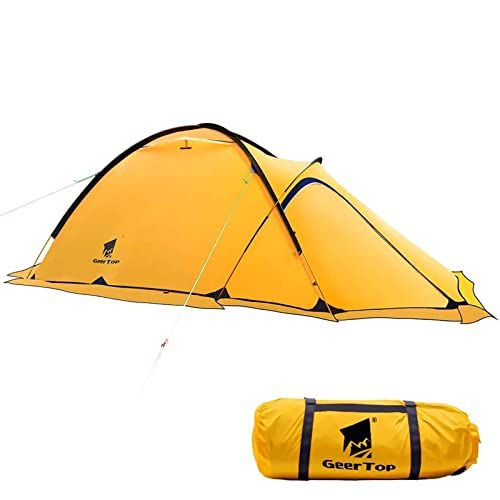
- PU8000 mm fly and PU5000 mm floor resist heavy weather.
- Snow skirts and double-wall build suit four-season use.
- Freestanding aluminum frame helps speed setup.
Best For: Backpackers needing a lightweight four-season shelter for harsh conditions.
Budget Cold-Weather Option
Underwood 4-Season Winter Tent

- PU5000 mm coating and rainfly support wet-weather use.
- Snow skirt helps in winter conditions.
- Compact freestanding design suits two campers.
Best For: Two-person campers wanting a compact four-season tent on a budget.
Snow-Skirt All-Season Shelter
BISINNA 2-Person 4 Season Tent

- Snow skirt helps block wind and snow
- 6.4 lb freestanding tent with aluminum poles
- PU 3000mm waterproof coating and 2 doors
Best For: Lightweight cold-weather backpacking for two
High-Headroom Winter Trekker
Clostnature 4 Season Backpacking Tent
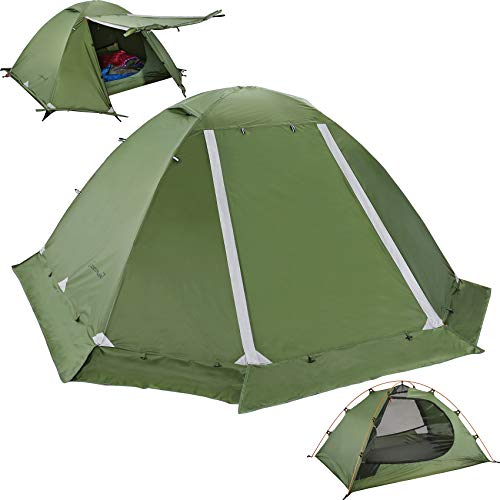
- PU 5000 coating with factory-sealed seams
- Snow flaps and dual vestibules for winter use
- 6.28 lb freestanding backpacking design
Best For: Solo or compact two-person winter backpacking
Extreme-Weather Trail Shelter
ShinHye 1/2 Person 4 Season Tent

- PU 5000mm coating with sealed seams
- Snow skirt plus 7-series aluminum poles
- 5.5 lb compact design for harsh-weather trips
Best For: Solo adventurers needing maximum weather protection in a small tent
Solo Expedition Pick – Hilleberg Soulo 1P 4-Season Tent
If you want an expedition tent for extreme weather that still feels manageable to carry, the Hilleberg Soulo is built for serious solo use. Its fully freestanding dome design, integrated vestibule, and linked inner/outer pitch make it a practical choice when winds, snow, and fast-changing conditions are on the menu.
Best For: Solo backpackers, mountaineers, and remote travelers who prioritize maximum durability and all-season reliability.
Pros:
- Very strong 4-season construction with a freestanding dome shape and one integrated vestibule.
- Kerlon 1200 outer fabric and 15,000 mm floor are built for wind, rain, and heavy snow.
- Linked inner and outer tent pitching helps keep the inner tent dry during setup.
- Thoughtful details like pre-attached guy lines, ventilation, and included repair parts add utility.
Cons:
- Designed for one person, so it is not a fit for group trips.
- Premium materials and build quality place it in a higher-end category.
- The vestibule is compact at 6.4 sq ft.
The Soulo is the kind of shelter you buy when dependability matters more than price or extra space. For harsh-weather solo missions, it stands out as a compact, highly capable option with a long-term ownership mindset.
Compact Storm Option – Snugpak Scorpion 3 Waterproof Tent
The Snugpak Scorpion 3 is a practical expedition tent for extreme weather if you want a compact 3-person shelter with a waterproof outer. It uses taped and sealed seams, a 5000 mm waterproof rainfly, and lightweight aluminum poles, making it a straightforward option for rugged trips where pack size still matters.
Best For: Small teams, climbers, and mountaineers who want a compact waterproof tent with easy transport.
Pros:
- 5000 mm waterproof outer and fully taped, sealed seams support wet-weather protection.
- Ultra-compact pack size with included compression storage bag.
- Lightweight anodized aluminum poles help keep weight down for a 3-person tent.
- Three vents can help with airflow in changing conditions.
Cons:
- Best suited to smaller groups; space is tighter than larger basecamp tents.
- Only one door, which may be less convenient for three occupants.
- Trail-oriented design is less roomy than overlanding-style shelters.
Overall, the Scorpion 3 is a solid middle-ground choice for those who need weather protection without moving up to a bulky shelter. It balances packability, waterproofing, and usable space for alpine-style trips.
Fast Basecamp Shelter – Gazelle Backcountry T5 Hub Tent
If your idea of an expedition tent for extreme weather is a spacious basecamp shelter, the Gazelle Backcountry T5 is built around fast setup and rugged materials. Its 300D ripstop polyester shell, reinforced removable floor, and included footprint are aimed at tougher ground and variable conditions, while the HVAC port and vents add year-round comfort options.
Best For: Overlanding crews, basecamp setups, and campers who want fast pitching with lots of interior room.
Pros:
- 90-second setup with a hub frame makes deployment fast and simple.
- Heavy-duty 300D ripstop fabric, reinforced floor, and footprint improve durability.
- Large 137″ x 137″ interior and 79″ standing height create generous living space.
- HVAC port, roof vents, and window inserts help manage comfort in changing weather.
Cons:
- At 61 pounds, it is far heavier than backpacking-focused tents.
- Listed as a 3-season tent despite the all-season positioning in the product name.
- More of a basecamp or overlanding shelter than a pack-and-carry mountain tent.
The Backcountry T5 is best viewed as a rugged, roomy camp shelter that emphasizes convenience and durability over portability. For vehicle-supported trips, it offers a lot of shelter and comfort in one package.
Ultralight Alpine Pick – MSR Access 3 Lightweight 4-Season Tent
The MSR Access 3 is a strong fit if you need an expedition tent for extreme weather but still want to keep weight low for alpine travel. Its Easton Syclone poles are designed to resist breaking in challenging winter conditions, while the central-support frame, limited mesh, and vented rainfly are built to handle snow and condensation management.
Best For: Alpine travelers, snow-season hikers, and mountaineers who need a light 4-season tent.
Pros:
- Very light at 4 lbs 6 oz, especially for a 3-person 4-season tent.
- Easton Syclone composite poles are made to resist breaking in harsh winter conditions.
- Central-support frame helps resist snow loading while staying quick to set up.
- Limited mesh and rainfly vents help retain warmth and reduce condensation.
Cons:
- Less mesh means less airflow in milder weather.
- Smaller footprint than a roomy basecamp shelter.
- Best suited to fast-and-light alpine missions rather than comfort-heavy camping.
The Access 3 is the most travel-efficient option here for winter use, especially when every ounce matters. It trades some interior openness for a better balance of strength, warmth, and portability in the mountains.
Heavy-Duty Outfitter Pick – ALPS Taurus 4 for Rugged Weatherproof Camping
If you want an expedition tent for extreme weather conditions without jumping to a true winter mountaineering shelter, the ALPS Mountaineering Taurus 4 Outfitter is a practical heavy-duty option. Its 75D polyester rainfly, sealed seams, and tough 210D floor are built for dependable protection, while the two-door layout and vestibules make it easier to live with on longer trips.
Best For: Car campers, base camps, and serious outdoor users who want a rugged three-season tent with better-than-average weather protection.
Pros:
- Heavy-duty 210D nylon oxford floor adds durability and longevity.
- Factory-sealed seams, 1500 mm coating, and water-resistant construction help block rain.
- Two doors, two vestibules, and mesh panels improve access and ventilation.
- Freestanding design with aluminum poles and included stakes/guy ropes simplifies setup.
Cons:
- It is listed as a three-season tent, not a true four-season expedition model.
- Heavier and bulkier than minimalist backpacking tents.
- Weather protection is solid, but the waterproof rating is lower than dedicated extreme-weather tents.
Overall, this tent makes sense if your priority is a tough, roomy shelter that handles rough conditions better than a standard family tent. It is a strong pick for camping trips where durability and weather resistance matter more than shaving every ounce.
True All-Weather Choice – GEERTOP 4-Season Backpacking Tent for 2
For shoppers comparing an expedition tent for extreme weather, the GEERTOP 4 Season Backpacking Tent stands out as the most purpose-built option here. The PU8000 mm rainfly, PU5000 mm floor, snow skirts, and full-coverage double-wall design are aimed at rain, wind, and cold-weather conditions, while the freestanding aluminum frame keeps setup straightforward.
Best For: Backpackers, alpine campers, and travelers who need a lightweight four-season shelter for harsh, unpredictable conditions.
Pros:
- PU8000 mm fly and PU5000 mm bathtub floor offer strong waterproof protection.
- Four-season design includes snow skirts and full double-wall coverage.
- Freestanding aluminum pole structure allows quick setup when weather changes fast.
- Rainfly can be used alone for a lighter shelter option.
Cons:
- Two-person capacity limits space for extra gear or larger campers.
- At about 7.4 lb, it is not the lightest backpacking shelter.
- Single vestibule provides less exterior storage than larger expedition tents.
In practical terms, this is the strongest match if your main goal is real all-weather protection in a packable format. It balances storm readiness and portability well for serious cold- and shoulder-season trips.
Budget Cold-Weather Option – Underwood 4-Season Winter Tent
If you need an expedition tent for extreme weather on a smaller budget, the Underwood Aggregator 4 Season Tent is worth a look. It pairs a PU5000 mm coating with a full cover rainfly, snow skirt, and aluminum poles, giving it the core features you want for cold, wet, and windy camping without adding much weight.
Best For: Two-person campers who want a compact four-season tent for winter trips and stormy shoulder-season use.
Pros:
- Snow skirt and full rainfly help with winter and wet-weather protection.
- PU5000 mm coating and aluminum poles support waterproof, windproof performance.
- Freestanding design makes setup easier for backpacking or camping.
- Mesh panels, double-layer door, and interior pocket add day-to-day usability.
Cons:
- Space is compact, so it is best suited to two campers with limited gear.
- Not as robustly specified as higher-end four-season expedition tents.
- Single vestibule limits sheltered gear storage outside the tent body.
This tent is a sensible choice if you want cold-weather capability without overcommitting on price or bulk. It focuses on the essentials and should appeal most to campers who need a simple, portable winter shelter.
Snow-Skirt All-Season Shelter – BISINNA 2-Person 4 Season Tent
If you want an expedition tent for extreme weather without carrying a huge load, this BISINNA 4-season model is built around practical cold-weather basics. The snow skirt helps block wind and snow, the PU 3000mm waterproof coating adds wet-weather protection, and the freestanding aluminum-pole design keeps setup simple for solo use.
Best For: Backpackers and hikers who want a lightweight 2-person cold-weather tent with snow protection and easy setup.
Pros:
- Snow skirt helps keep the inner tent warmer and drier in snow or cold weather
- Lightweight at 6.4 lbs with a packed size that fits easily in a backpack
- Double-layer design with 2 doors and 2 windows for better airflow
- Freestanding build with two aluminum poles makes setup straightforward
Cons:
- Best suited to 2 people at most, so space is limited for gear-heavy trips
- Condensation management still matters if the inner and outer layers touch
- Waterproofing is strong, but it is rated PU 3000mm rather than the higher ratings on some rivals
This is a solid value pick if you want a lighter all-season shelter with real cold-weather features rather than a bulky mountaineering tent. The foyer adds useful storage, but the overall focus stays on portability and easy pitching.
High-Headroom Winter Trekker – Clostnature 4 Season Backpacking Tent
The Clostnature 4 Season Backpacking Tent is a strong fit if you need an expedition tent for extreme weather that still packs light. It uses a PU 5000-coated rain fly, groundsheet, and bathtub floor, plus factory-sealed seams and snow flaps to help keep out wet weather and spindrift.
Best For: Backpackers and winter campers who want a lightweight 1/2-person tent with stronger weather protection.
Pros:
- PU 5000 coating and sealed seams improve wet-weather protection
- Snow flaps help seal out spindrift in colder conditions
- Lightweight at 6.28 lbs total, with a low packed size for backpacking
- Two vestibules add convenient storage for shoes or gear
Cons:
- Room is limited, even though it is described as large for its class
- At 1/2 person capacity, it is not meant for comfortable shared sleeping
- Lightweight design prioritizes portability over extra living space
For solo travelers who want an all-season tent with better-than-basic weather materials, this model stands out. The combination of snow flaps, vestibules, and easy freestanding setup makes it especially practical for cold, wet trips where pack weight still matters.
Extreme-Weather Trail Shelter – ShinHye 1/2 Person 4 Season Tent
If your priority is an expedition tent for extreme weather, this ShinHye 4-season backpacking tent leans hard into storm protection. It pairs a PU 5000mm waterproof coating with double-stitched sealed seams, a snow skirt, and upgraded aluminum poles and stakes for better stability in snow, rain, and wind.
Best For: Backpackers, hikers, and bikepackers who need a compact cold-weather tent with stronger wind, snow, and rain protection.
Pros:
- PU 5000mm coating and sealed seams are built for heavy rain and snow
- Snow skirt helps block cold wind and drifting snow from the bottom
- 7-series aluminum poles and aluminum stakes add stability
- Lightweight at 5.5 lbs with a compact packed size for travel
Cons:
- Space is tight at 1/2 person capacity, so it is not a roomy shelter
- Double-layer setup is practical, but it is still a compact minimalist tent
- Best performance is tied to careful setup in harsh conditions
This is the most weather-focused option in the group, especially for users who care about snow, wind, and waterproofing first. The design stays portable, but its real strength is delivering more serious protection in a small package.
How We Picked the Best Expedition Tent for Extreme Weather
We focused on tents that make sense for harsh alpine and winter use: strong pole structures, trustworthy waterproofing, secure guy-out points, cold-weather-friendly fabrics, and designs that can handle snow, wind, and repeated use. We also looked at weight, capacity, and how easy each shelter should be to pitch in bad conditions.
Quick Comparison
The best Expedition Tent for Extreme Weather depends on your trip style. Ultralight solo climbers usually want the smallest, toughest shelter possible. Two-person backpackers may prefer a balance of weight and interior room. Larger groups and semi-mobile basecamp users often benefit more from extra space, faster setup, and stronger livability than from shaving ounces.
Key Buying Factors for an Expedition Tent for Extreme Weather
Weather Protection
Look for fully taped seams, high waterproof ratings, full coverage rainflies, and low-profile shapes that shed wind. For snow trips, consider how the fly and floor handle prolonged moisture and splashback.
Structure and Stability
Poles, hub design, and guying options matter in exposed terrain. A true Expedition Tent for Extreme Weather should stay stable in gusts and support the added load of wet snow.
Weight Vs. Strength
Backcountry users should weigh packed size and carry weight against durability. Lightweight tents are appealing, but if you expect sustained storms, a slightly heavier build may be the safer choice.
Capacity and Livability
Solo tents save weight, while two- and three-person models improve comfort, gear storage, and storm waiting space. Larger tents are often better for winter camping where you spend more time inside.
Setup in Bad Conditions
Fast, simple pitching matters when gloves are on and weather is changing. Freestanding or fly-first designs can be a major advantage in snow, frozen ground, or tight campsites.
Who Should Buy Which Expedition Tent for Extreme Weather?
Choose a solo model if you prioritize low weight, minimal footprint, and efficient storm protection. Pick a two-person tent if you want the most versatile option for backpacking and winter trips. Go with a three- or four-person shelter if comfort, gear storage, and longer storm-bound stays matter more than pack weight. For group or truck-adjacent use, the fastest-pitch, roomiest models are usually the best fit.
In short, the best Expedition Tent for Extreme Weather is the one that matches your season, terrain, and tolerance for weight. Prioritize proven protection first, then narrow by space, setup speed, and carry comfort.