Marathon training puts sustained stress on your legs, so the right compression boots can make post-run recovery more comfortable and convenient. These systems use sequential air compression to support circulation, reduce the sensation of heavy legs, and provide a repeatable recovery routine at home.
Our roundup compares 10 options across wireless designs, full-leg coverage, pressure controls, sizing, and athlete-focused features. Use the guide below to narrow your choice based on your training volume, recovery goals, and budget.
Best 10 Compression Boots for Marathon Recovery Picks for 2026
Best Overall

- Seven compression levels and five zones
- Bluetooth app customization
- Standard 31–35-inch inseam; 30-inch maximum thigh
Best For: Customizable at-home marathon recovery
Best Portable
Therabody JetBoots Prime Wireless

- Wireless, foldable design with travel bag
- Four pressure levels and time settings
- Short fit for 27–32-inch leg length
Best For: Traveling runners and race-day recovery
Best Professional-Style
Air Relax AR-2 Compression Boots

- Three selectable therapy modes
- FDA- and CE-cleared professional device
- One-year warranty and lifetime support
Best For: Structured, home-based recovery sessions
Best Lightweight Wireless
Compex Ayre Wireless Recovery Boots

- Up to 120 mmHg compression
- Rechargeable battery with up to three hours
- Four separately or simultaneously inflatable chambers
Best For: Portable recovery in an S/M fit
Best FDA-Cleared Option
Sharper Image Powerboost Boots

- FDA-cleared compression therapy
- Five zones and five massage modes
- Up to 120 mmHg; corded operation
Best For: Customizable at-home recovery with FDA-cleared therapy
Best Cordless Design
FIT KING Air Compression Boots

- Built-in cordless controllers
- 11 levels from 50–150 mmHg
- Synchronized or independent leg use
Best For: Portable recovery at races, gyms, and home
Best for Program Variety
MUSUGY Sequential Compression Boots

- Six full-leg and targeted modes
- Nine levels from 40–120 mmHg
- Pressure sensor and three timers
Best For: Highly adjustable full-leg or zone-specific sessions
Best with Extra Features
FIT KING Pro 5-Zone Cordless Compression Boots
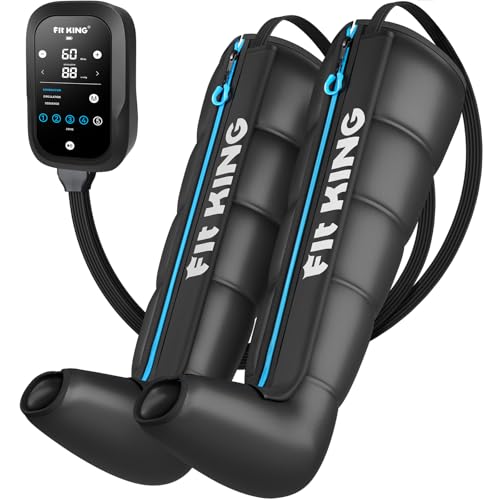
- Five-zone control for targeted or full-leg sessions
- 3–4 hours of cordless battery-powered use
- 11 pressure levels and a two-year warranty
Best For: Marathoners seeking highly adjustable, portable recovery
Best Wireless Option
Anaconda Wireless Compression Recovery Boots

- Four-hour rechargeable battery
- Four sequential zones from foot to thigh
- Three modes with no app required
Best For: Runners wanting simple, travel-friendly wireless recovery
Best Value Corded Pick
FIT KING Full-Leg Air Compression Boots

- Four independent channels cover the full leg
- Eight pressure intensities and three modes
- Two-year worry-free support
Best For: Home users who prefer adjustable corded recovery
Best Overall – Hyperice Normatec 3 Legs
For runners comparing compression boots for marathon recovery, the Hyperice Normatec 3 offers dynamic air compression across five overlapping zones. Its seven compression levels and ZoneBoost settings provide plenty of control for post-race muscle fatigue and circulation-focused recovery.
Best For: Marathoners who want a highly customizable, established recovery system and fit the standard 31–35-inch inseam range.
Pros:
- Seven compression levels with patented Pulse technology.
- Five overlapping zones and ZoneBoost for targeted treatment.
- Bluetooth app connectivity unlocks additional customization.
- Designed for legs, with intended uses including circulation, soreness, and muscle recovery.
Cons:
- Only the Standard size is available through the supplied listing.
- Requires corded electric power during use.
- Maximum thigh circumference is 30 inches.
The Normatec 3 is a strong choice when treatment control and app-based customization matter more than portability. Confirm the inseam and thigh measurements before ordering.
Best Portable – Therabody JetBoots Prime Wireless
The Therabody JetBoots Prime are a practical pick for compression boots for marathon recovery when you need a wireless setup. They fold compactly, include a drawstring backpack, and offer built-in controls for four pressure levels and four treatment intervals.
Best For: Runners who travel to races or want recovery boots they can use away from an outlet, provided the short fit is appropriate.
Pros:
- Completely wireless and folds for backpack-friendly storage.
- Built-in control panel with four pressure levels and four time intervals.
- Up to three hours of battery life and usable while charging.
- Non-porous, easy-to-clean medical-grade materials.
Cons:
- This short model is intended for a 27–32-inch leg length; measure before ordering.
- Charging takes five hours according to the supplied details.
- Offers four chambers rather than the five-zone layout of some alternatives.
Choose the JetBoots Prime if portability and simple controls are priorities. Its fit range is narrower than some full-length options, so leg measurements are essential.
Best Professional-Style – Air Relax AR-2 Compression Boots
The Air Relax AR-2 is a professional-style option among compression boots for marathon recovery. Its corded pump provides three therapy modes, while the medical-grade system is designed for circulation support, lymphatic fluid movement, muscle fatigue, and post-workout relief.
Best For: Runners who prefer multiple therapy modes, a corded professional-grade system, and a one-year warranty with lifetime support.
Pros:
- FDA-cleared in the U.S. and CE MDD-cleared in Europe, according to the supplied notes.
- Three modes: peristaltic, cyclical uniform, and continuous therapy.
- Quiet operation and automatic shutoff.
- Includes a one-year warranty and lifetime support.
Cons:
- Corded electric operation is less convenient for travel.
- The supplied listing identifies this version as size M (Size 3), so fit should be confirmed.
- Its professional-style pump and components make it less compact than wireless alternatives.
The AR-2 suits athletes who value therapy-mode variety and support coverage over a lightweight, cordless design. Check the available sizing before purchase.
Best Lightweight Wireless – Compex Ayre Wireless Recovery Boots
Compex Ayre Wireless Rapid Recovery Compression Boots - High Tech Compression Massage - S/M
Check Price On AmazonThe Compex Ayre is a straightforward wireless choice for compression boots for marathon recovery. It combines rechargeable operation with compression up to 120 mmHg, four chambers, and a lining designed to simplify cleaning and help limit odors.
Best For: Runners seeking portable compression therapy in an S/M boot with strong maximum pressure and a rechargeable battery.
Pros:
- Wireless rechargeable design for use away from a power outlet.
- Compression reaches up to 120 mmHg.
- Four chambers can inflate separately or simultaneously.
- Battery provides up to three hours of recovery therapy.
Cons:
- Only the S/M size is identified in the supplied listing.
- The notes provide less information about treatment controls and settings than some competing models.
- Battery life is limited to up to three hours per charge.
The Compex Ayre is appealing for runners who want a compact wireless routine without giving up a high stated pressure ceiling. Verify that the S/M fit works for your legs before ordering.
Best FDA-Cleared Option – Sharper Image Powerboost Boots
For shoppers comparing compression boots for marathon recovery, the Sharper Image Powerboost Boots stand out with FDA-cleared compression therapy, five-zone coverage, and several ways to customize a session. They use corded power, making them better suited to a consistent recovery setup at home than to portable use.
Best For: Runners who want customizable full-leg compression and FDA-cleared temporary relief for minor muscle aches and pains.
Pros:
- FDA-cleared under 510(k) K251531 for temporary relief of minor muscle aches and pains.
- Five air chambers provide full-leg compression, with pressure levels up to 120 mmHg.
- Five modes and targeted zone control let you focus on selected areas.
- Active deflation, foldable boots, and one- or two-boot operation add convenience.
Cons:
- Corded electric operation limits portability and requires access to an outlet.
- The listed S/M fit is intended for a 25- to 31-inch inseam, so sizing should be checked carefully.
This is a strong choice if customization and regulatory clearance matter more than cordless convenience. Its full-leg design and zone controls make it versatile for post-run sessions, while the fit range makes measurement essential before ordering.
Best Cordless Design – FIT KING Air Compression Boots
The FIT KING system is a practical pick for athletes seeking compression boots for marathon recovery without a separate control unit or hose. Its built-in controllers, 11 pressure levels, and rechargeable battery setup make it especially convenient for use away from a fixed recovery station.
Best For: Runners who prioritize cordless portability, broad pressure adjustment, and synchronized two-leg compression.
Pros:
- All-in-one cordless design with built-in controllers and five-chamber leg sleeves.
- Offers 11 pressure levels from 50 to 150 mmHg, three modes, and 10 time intervals.
- Smart Sync technology coordinates both legs, while the units can also operate independently.
- Rechargeable batteries provide about 2.5 hours of average battery life after a two-hour charge.
Cons:
- The large model may not suit runners needing a smaller fit.
- Battery use requires charging, unlike a directly powered system.
- At 4.2 kg, the system is less lightweight than some simpler recovery options.
Choose this model when portability is central to your routine, such as recovering at races, the gym, or while traveling. The high pressure range and dual-user flexibility add versatility, but the size and battery specifications deserve attention before purchase.
Best for Program Variety – MUSUGY Sequential Compression Boots
For runners comparing compression boots for marathon recovery, the MUSUGY system offers detailed control over pressure, treatment area, and session length. Its five sequential chambers cover the foot through the thigh, while the built-in pressure sensor is designed to balance compression across zones.
Best For: Athletes who want multiple sequential and targeted programs for full-leg or area-specific recovery.
Pros:
- Five chambers create sequential compression from the foot through the thigh.
- Nine pressure levels range from 40 to 120 mmHg.
- Six modes include full-leg sequences and focused foot, calf, or thigh programs.
- Three timers, memory functionality, reinforced nylon, and a 12-month warranty support regular use.
Cons:
- The listed fit requires a 36-inch or longer inseam, with thigh and calf circumference limits.
- Only 15-, 20-, and 25-minute session timers are specified.
- Its feature-rich controls may be more than runners seeking a simple one-button setup need.
This model is compelling for users who want to fine-tune recovery by body area rather than run the same program every time. Confirm the unusually specific fit requirements first, especially if you are comparing it with more broadly sized boots.
Best with Extra Features – FIT KING Pro 5-Zone Cordless Compression Boots
For runners comparing compression boots for marathon recovery, the FIT KING Pro stands out for its cordless design, broad pressure range, and detailed zone control. Five air chambers, 11 pressure levels, and three massage modes let you tailor sessions from foot to thigh, while the rechargeable battery supports recovery away from an outlet.
Best For: Marathoners who want customizable, full-leg recovery at home, in the gym, or while traveling.
Pros:
- Five-zone control supports full-leg, multi-zone, or single-zone sessions.
- Cordless 2,500mAh battery provides 3–4 hours of continuous use.
- Offers 11 pressure levels, 10 time settings, and three massage modes.
- Includes a carry bag and two-year warranty.
Cons:
- The 4.5 kg weight may be less convenient for frequent travel.
- Its many controls may take longer to set up than simpler boots.
The FIT KING Pro is a strong all-around choice when precise adjustments and portability matter. Its five-zone system is especially useful for targeting tired calves or feet after long-distance training.
Best Wireless Option – Anaconda Wireless Compression Recovery Boots
The Anaconda Wireless boots are a practical pick for athletes who want straightforward compression boots for marathon recovery. They deliver compression through four sequential zones and include three operating modes, a four-hour battery, and a travel bag without requiring an app.
Best For: Runners who prioritize simple wireless operation and long battery life for recovery at home, the gym, or on the road.
Pros:
- Wireless design offers up to four hours of rechargeable battery use.
- Four zones cover the foot, calf, knee, and thigh.
- Three modes include full-leg, massage, and targeted-zone recovery.
- Simple controller requires no smartphone app.
Cons:
- Provides four zones, fewer than some five-zone alternatives.
- Medium sizing may not suit every runner.
- Includes a one-year warranty.
Choose the Anaconda if convenience is your priority. Its four-hour battery and uncomplicated controls make it well suited to post-race routines when you want to start a session quickly.
Best Value Corded Pick – FIT KING Full-Leg Air Compression Boots
For shoppers who do most recovery at home, the FIT KING FT-082A offers a focused approach to compression boots for marathon recovery. Its corded pump drives four independent air channels across the feet, calves, knees, and thighs, with sensor-based adjustment and three selectable session times.
Best For: Home-based athletes who want full-leg compression and adjustable settings without paying for a cordless system.
Pros:
- Four independent air channels provide full-leg coverage.
- Sensor control adjusts inflation to different leg sizes.
- Three modes and eight pressure intensities support customized sessions.
- Backed by a two-year worry-free customer support promise.
Cons:
- Corded electric operation limits portability.
- It is not water resistant.
- The large-leg version may require careful fit checking.
This model makes the most sense if you recover in one regular location and do not need battery operation. It delivers broad leg coverage and useful adjustment options while keeping the setup relatively focused.
How We Picked the Best Compression Boots for Marathon Recovery
We focused on features that matter after long runs and hard training blocks: sequential compression, usable pressure adjustment, full-leg coverage, fit options, battery or corded operation, controls, portability, and overall practicality. We also considered whether each system is suited to regular home recovery or occasional post-race use.
Because comfort and fit strongly affect results, products with multiple sizes, clear inseam guidance, or flexible boot designs received particular attention. FDA clearance, where listed by the manufacturer, was treated as a product attribute rather than a guarantee of individual results.
Quick Comparison
| Best For | Features to Prioritize | Products in This Roundup |
|---|---|---|
| Premium recovery routines | Refined controls, reliable pressure, comfortable fit | Hyperice Normatec 3, Therabody JetBoots Prime |
| Wireless convenience | Built-in battery, independent controls, portability | Therabody, Compex Ayre, FIT KING Cordless, Anaconda |
| Value-focused recovery | Adjustable intensity, practical coverage, lower cost | Sharper Image, Sequential, FIT KING models |
| Higher-volume legs or larger fit | Full-leg coverage and appropriate sizing | Air Relax AR-2, FIT KING Large models |
Key Buying Factors for Compression Boots for Marathon Recovery
Fit and Leg Coverage
Check inseam, calf, and thigh measurements before ordering. A boot that is too short may not compress the areas you want, while an overly loose fit can reduce the consistency of the massage. Full-leg models are generally more useful for marathon recovery than calf-only sleeves, but they also take more storage space.
Pressure and Zone Control
Look for several intensity levels and sequential zones that inflate from the lower leg upward. More settings let you choose a gentler session after a race or a firmer routine during regular training. Start conservatively and increase pressure only if it remains comfortable.
Wireless Operation and Battery Life
Cordless boots are easier to use while traveling, stretching, or relaxing away from an outlet. Confirm expected battery life, charging time, and whether both legs can be controlled independently. Corded systems may be the better choice if you mainly recover in one dedicated location.
Controls, Modes, and Portability
Simple controls make it easier to use boots consistently. Preset programs can be convenient, while manual adjustments are useful for tailoring sessions. Consider total packed size and weight if the boots will travel to races.
Who Should Buy Which Compression Boots for Marathon Recovery?
Choose a premium system such as the Hyperice or Therabody option if you train frequently, value polished controls, and expect to use compression boots several times per week. Wireless models from Compex, FIT KING, or Anaconda make more sense for athletes who prioritize portability and a less restrictive setup.
For shoppers seeking practical recovery without premium pricing, the Sharper Image, Sequential, and FIT KING systems offer useful features to compare. Larger athletes should pay close attention to the listed size and choose a Large model when measurements require it. If you have a medical condition, unexplained leg pain, numbness, swelling, or circulation concerns, ask a healthcare professional whether pneumatic compression is appropriate before using a device.