The best composting camping toilets make off-grid travel more comfortable without requiring a permanent bathroom installation. This roundup compares compact, urine-diverting, dry-flush, and bag-based options for camping, van life, RVs, and boats.
Use the guide below to match capacity, footprint, odor control, cleanup, and portability to the way you travel.
Best 10 Composting Camping Toilets Picks for 2026
Best Compact Separator
BOXIO MAX+ Composting Camping Toilet

- Compact for vans, boats, and car camping
- Urine-diverting design works without chemicals
- Handles about 8–10 uses before disposal
Best For: Space-conscious campers wanting independent waste disposal
Best Waterless Convenience
LE-310 Dry Flush Camping Toilet

- One-click automatic waste-bag sealing
- Rechargeable battery supports 70–100 uses
- Compact design supports up to 330 pounds
Best For: Campers seeking automated, waterless waste handling
Best No-Power Option
NOMAD Urine-Diverting Composting Toilet

- Needs no electricity, plumbing, or chemicals
- Compact and portable for remote setups
- Uses commonly available 8-gallon bags
Best For: Primitive camping and off-grid users without power
Best Built-In Van Upgrade
Origin Compact Composting Toilet
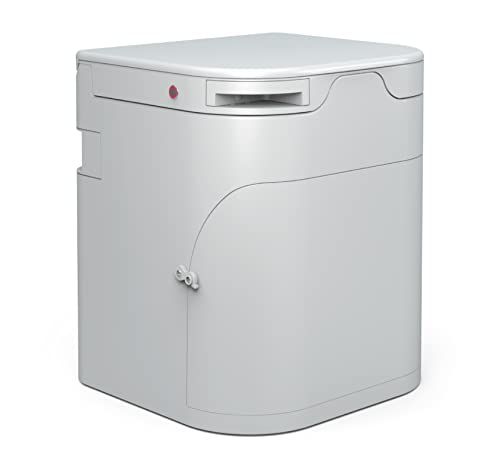
- 15-by-16-inch footprint fits tight builds
- 12V push-button agitator avoids manual cranking
- Urine-diverting system holds about 25–30 uses
Best For: Dedicated van, RV, boat, or tiny-home bathroom builds
Best Budget-Friendly Emergency Option
Ann Katy Upgrade XL Portable Toilet

- 15.7-inch elevated seat
- Folds with carrying bag
- Multipurpose, quick setup
Best For: Families, road trips, and emergency use
Best Lightweight Urine-Diverting Pick
WandaGO Lite Composting Toilet

- Separates urine and solids
- No water, chemicals, or electricity
- 7.9-pound travel-ready design
Best For: Campervans and compact mobile setups
Best Durable German-Made Model
Trelino Evo S Composting Toilet

- 1.2- and 1.6-gallon containers
- Supports up to 330 pounds
- Two-year warranty included
Best For: Frequent camping and van travel
Best Budget Gel-Bag Toilet
Wide-Seat Portable Camping Toilet

- 450-pound ABS construction with a 12-inch-wide seat
- Includes waste bags, urine gel, storage bag, and holders
- Folds down and is washable for easier travel
Best For: Families, car campers, and emergency use
Best for Extended Trips
YITAMOTOR Portable RV Camping Toilet

- Separate 3.17-gallon fresh and 5.28-gallon waste tanks
- Manual double flush needs no batteries or plumbing
- Sealing valve helps control odors and leaks
Best For: RV use, off-grid stays, and longer camping trips
Best Ultraportable Option
Ergonomic Gel-Bag Camping Toilet
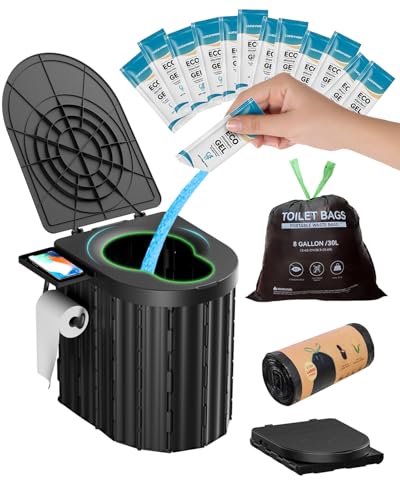
- Folds to a compact 13-by-15.35-by-2.67-inch profile
- 450-pound capacity with an ergonomic 12-inch opening
- Includes 12 bags, 12 gel packs, carry bag, and holders
Best For: Hiking, van travel, road trips, and compact packing
Best Compact Separator – BOXIO MAX+ Composting Camping Toilet
The BOXIO MAX+ is a compact option for composting camping toilets, using a urine-diverting design instead of chemicals. Its rectangular form fits vans, boats, car trunks, and other space-conscious camping setups.
Best For: Campers who want a compact, chemical-free toilet with separate solid and liquid disposal.
Pros:
- Compact design suits vans, boats, pop-top cars, and gazebos.
- Separation system helps reduce odor without chemicals.
- Can handle approximately 8–10 uses before disposal is needed.
- Includes bags, clips, a separation container, urine canister, and plug.
Cons:
- Disposal still requires separate handling of solids and liquid.
- The supplied dimensions vary between the product title and detailed specifications, so verify fit before installation.
With its portable footprint and urine-separating setup, the BOXIO MAX+ is a practical choice for mobile campers who value independent disposal and minimal maintenance.
Best Waterless Convenience – LE-310 Dry Flush Camping Toilet
The LE-310 is a dry-flush alternative to traditional composting camping toilets. It uses a one-click electric sealing system, so campers can bag waste without water, plumbing, or manual cleanup.
Best For: RV travelers, van lifers, and campers who prioritize automatic sealing, odor control, and rechargeable operation.
Pros:
- One-click operation automatically seals the waste bag.
- Waterless design requires no plumbing setup.
- Waste bags and coagulant are intended to help control leaks and odors.
- Rechargeable battery supports approximately 70–100 uses per charge.
Cons:
- At 17 pounds, it is heavier than several simple, non-electric portable toilets.
- Requires charging and proprietary-style consumables such as bags and coagulant pouches.
- It is a dry-flush toilet rather than a composting toilet.
The LE-310 makes waste handling more automated than a conventional composting camping toilet, making it appealing for users who have access to charging and want a low-contact disposal process.
Best No-Power Option – NOMAD Urine-Diverting Composting Toilet
The NOMAD is a straightforward choice among composting camping toilets for remote use. It needs no electricity, plumbing, chemicals, or septic connection, while its urine-diverting design separates liquids from solids.
Best For: Primitive campers, truck-camper owners, hunters, boaters, and field users without reliable power.
Pros:
- Operates without electricity, wiring, plumbing, or black tanks.
- Urine diversion helps keep solids dry and reduce odor.
- Compact footprint fits truck beds, car trunks, rooftop tents, and small boats.
- Uses widely available 8-gallon bags and includes coco coir, bags, and a cleaning spray bottle.
Cons:
- Requires adding composting medium and manually tying off bags.
- Solid and liquid waste still need to be handled separately.
For off-grid trips where simplicity matters more than automation, the NOMAD offers a portable, low-maintenance setup with broadly available bag supplies.
Best Built-In Van Upgrade – Origin Compact Composting Toilet
The Origin is designed for permanent or semi-permanent installation in compact vans, RVs, boats, and tiny homes. Its urine-diverting system, 12V electric agitator, and ventilation hose provide a more integrated approach to composting camping toilets.
Best For: Van lifers and off-grid owners building a dedicated bathroom with 12V power available.
Pros:
- Small 15-by-16-inch footprint is suited to tight layouts.
- Push-button 12V agitator eliminates manual cranking.
- Urine-diverting system uses a 2.4-gallon bottle and keeps solids dry.
- Includes mounting screws, power cable, and venting hose.
Cons:
- At 28 pounds, it is less convenient to move than lighter portable models.
- Requires 12V power and a venting installation.
- Its floor-mounted design is better suited to a dedicated build than occasional camping.
The Origin is a strong fit for a compact off-grid bathroom where convenience and integration matter. Its electric agitator and ventilation features make it more appliance-like than a basic portable toilet.
Best Budget-Friendly Emergency Option – Ann Katy Upgrade XL Portable Toilet
If you need a simple backup among composting camping toilets, the Ann Katy Upgrade XL is a folding portable toilet designed for quick setup. Its padded leather-and-density-board construction, 15.7-inch seat height, and included trial-size bags make it practical for camping, road trips, boating, and emergencies.
Best For: Campers and families who want a comfortable, multipurpose toilet that folds for transport.
Pros:
- 15.7-inch height is designed for a more chair-like sitting position.
- Folds compactly and includes a waterproof carrying bag plus two handles.
- Can also function as a storage box, trash can, stool, or small table.
- Requires no installation and sets up in seconds.
Cons:
- This is a bag-based portable toilet rather than a urine-diverting composting system.
- Only two trial-size trash bags are included.
- At 2.68 kg, it is heavier than some minimalist folding potties.
The Ann Katy is best viewed as a comfortable, flexible emergency toilet rather than a true composting model. Choose it when portability, a higher seat, and multiple uses matter more than separated waste containers.
Best Lightweight Urine-Diverting Pick – WandaGO Lite Composting Toilet
The WandaGO Lite is a compact choice for shoppers comparing composting camping toilets for campervans and mobile setups. Its urine-and-solids separation system works without water, chemicals, or electricity, while the closing lid and travel fastening system help contain spills and odors during transport.
Best For: Campervan travelers who want a lightweight, chemical-free dry toilet with separated waste containers.
Pros:
- Compact 11.8-by-15-by-13.4-inch design weighs 7.9 pounds.
- Separates urine and solids without requiring water, chemicals, or electricity.
- Rated to support up to 330.7 pounds.
- Closing lid and fastening system improve travel security.
Cons:
- Requires periodic emptying after approximately 10–20 urination uses and 8–12 defecation uses.
- Its compact form may provide less seat height than a household-style toilet.
- The supplied notes do not specify a warranty.
With its low weight, urine level indicator, and sealed travel design, the WandaGO Lite is a strong fit for mobile spaces. It is especially appealing if you want dry operation without adding water or electricity to your camping setup.
Best Durable German-Made Model – Trelino Evo S Composting Toilet
The Trelino Evo S is a sturdy option among composting camping toilets, offering separate 1.2-gallon urine and 1.6-gallon solid-waste containers. Its separation and drying design is intended to reduce odors without chemicals or water, making it suitable for vans, tents, and other small spaces.
Best For: Campers seeking a durable, low-maintenance toilet with separate containers and generous capacity.
Pros:
- Separate containers hold 1.2 gallons of urine and 1.6 gallons of solids.
- Designed for approximately 9–11 urination uses and 6–8 defecation uses before emptying.
- Water-resistant ABS construction supports up to 330 pounds.
- Includes waste containers, two urine-canister lids, 10 bags, and a two-year warranty.
Cons:
- Weighs 3.9 kg, making it heavier than the WandaGO Lite.
- Its 15.35-inch depth may require more storage space in very compact interiors.
- Emptying and cleaning two containers still requires regular maintenance.
The Evo S balances capacity, durability, and home-like usability in a portable form. It is a sensible upgrade for longer trips or frequent use, particularly when separate emptying and a manufacturer warranty are priorities.
Best Budget Gel-Bag Toilet – Wide-Seat Portable Camping Toilet
For shoppers comparing composting camping toilets, this portable model offers a straightforward, bag-based setup with urine gel packs for solidifying liquid waste. Its wide ABS seat, 450-pound capacity, washable construction, and folding design make it a practical option for car camping, emergencies, and other trips without restroom access.
Best For: Campers, families, road travelers, and anyone who wants a compact toilet with included bags and gel packs.
Pros:
- Supports up to 450 pounds and includes a 12-inch extra-wide seat.
- Comes with 15 waste bags, 10 urine gel packs, a storage bag, and useful holders.
- Folds for transport and can be washed clean after use.
Cons:
- Uses disposable bags and gel packs rather than a reusable composting chamber.
- At 5 pounds and 14.5 inches tall, it may take more space than ultralight emergency options.
This is a versatile, comfort-oriented portable toilet rather than a traditional separating composting toilet. Choose it if quick setup, a stable seat, and simple waste-bag disposal matter most.
Best for Extended Trips – YITAMOTOR Portable RV Camping Toilet
Among composting camping toilets and portable RV alternatives, this YITAMOTOR model is designed for longer stays where a larger waste capacity and flush function are useful. It combines a 3.17-gallon fresh-water tank, a 5.28-gallon waste tank, and a manual double-flush pump without requiring plumbing or batteries.
Best For: RV travelers, off-grid campers, and longer trips where a flushable toilet with separate water and waste tanks is more convenient.
Pros:
- Provides a 5.28-gallon waste tank and 3.17-gallon fresh-water tank.
- Manual double-flush pump works without batteries or plumbing.
- Instant-sealing slide valve helps contain odors and leaks.
- Large emptying spout is designed for easier waste disposal.
Cons:
- Its 13.23-pound weight and roughly 18-inch width are less convenient for lightweight camping.
- With a 275-pound load capacity, it supports less weight than the two ABS bag toilets here.
- It is a flush-and-hold portable toilet, not a true composting toilet.
The YITAMOTOR is the strongest fit when capacity and a familiar flush experience outweigh portability. Its larger footprint and heavier build make it better suited to RVs, base camps, and vehicle-supported adventures.
Best Ultraportable Option – Ergonomic Gel-Bag Camping Toilet
If portability is the priority when comparing composting camping toilets, this folding ABS model is particularly easy to carry. It weighs about 4.8 pounds, folds to a compact 13-by-15.35-by-2.67-inch profile, and includes urine gel packs and waste bags to simplify cleanup during camping, travel, and outdoor emergencies.
Best For: Hikers, van lifers, road trippers, anglers, and campers who need a lightweight toilet that packs flat.
Pros:
- Supports up to 450 pounds and has a contoured ergonomic seat with a 12-inch opening.
- Folds nearly flat and includes a carry bag for transport.
- Urine gel solidifies liquid waste, while the odor-resistant plastic is easy to maintain.
- Includes 12 waste bags, 12 gel packs, a phone tray, and a toilet-paper holder.
Cons:
- It relies on disposable bags and gel rather than a reusable composting system.
- The supplied waste-bag quantity is limited for extended trips.
This is the most travel-friendly choice of the three for users who need a compact, grab-and-go toilet. Its folding profile and included cleanup supplies are compelling, provided you are comfortable managing disposable bags.
How We Picked the Best Composting Camping Toilets
We focused on practical differences that matter when a toilet is used away from a household sewer system: overall size, portability, waste capacity, separation or containment design, odor-control features, cleaning requirements, and suitability for adults. The selection includes compact composting models, dry-flush designs, urine-diverting toilets, detachable-tank units, and simpler gel-bag toilets for buyers who prioritize low cost or occasional use.
Because product specifications and included supplies can vary, confirm the current dimensions, capacity, liners, separator components, and disposal instructions before ordering.
Quick Comparison
- Smallest footprints: Compact units such as the BOXIO, Origin, Evo S, and WandaGO Lite suit tight van, boat, and tent setups.
- More capacity: Larger self-contained or XL models reduce emptying frequency and may be more comfortable for adults.
- Lowest setup complexity: Gel-bag and leak-proof-bag toilets are simple for emergencies, children, and occasional camping.
- More controlled waste handling: Urine-diverting and dry-flush toilets can reduce direct contact and help manage odor when maintained correctly.
Key Buying Factors for Composting Camping Toilets
Footprint and Portability
Measure the storage location and the usable floor area, not just the toilet’s listed dimensions. A handle, nesting design, or detachable tank can make a substantial difference when moving equipment between a vehicle and campsite.
Waste Capacity and Emptying
Capacity affects how often you must service the toilet. A larger tank is useful for family trips or extended stays, while a smaller unit may be easier to carry and clean. Check whether solid and liquid waste are separated and how each container is emptied.
Odor Control and Ventilation
Urine diversion, tight seals, absorbent material, fans, and proper ventilation can all help control odor. No portable toilet is maintenance-free: keeping liquids separate, changing liners, and cleaning contact surfaces promptly are essential.
Comfort and Stability
Look for an adult-friendly seat, sufficient bowl opening, a stable base, and a height that works for the intended users. XL models may provide more comfort, but compact designs can be preferable where floor space is limited.
Cleanup and Supplies
Confirm what the toilet requires after purchase, including compostable bags, absorbent media, urine containers, gel packets, batteries, or ventilation accessories. A toilet with inexpensive, readily available consumables may be cheaper to own than one that depends on proprietary supplies.
Who Should Buy Which Composting Camping Toilets?
Van and boat travelers should prioritize a compact footprint, secure containers, and simple cleaning. RV and longer-stay campers may prefer higher-capacity self-contained or urine-diverting models. Families and occasional campers may find bag- or gel-based toilets easiest to deploy and dispose of. Minimalists and hikers with vehicle access should favor the lightest model that still offers adequate adult comfort. Whichever style you choose, verify local rules for waste disposal and follow the manufacturer’s sanitation instructions.