Building a capable home gym does not require a dedicated weight room. The best cable crossover machines for small spaces use wall-mounted frames, folding racks, adjustable pulleys, or integrated weight systems to deliver versatile training while limiting their footprint.
This roundup compares 10 space-conscious options for apartments, garages, spare rooms, and compact home gyms. Pay close attention to mounting requirements, pulley adjustability, cable travel, resistance setup, and the clearance needed to train safely.
Best 10 Cable Crossover Machines for Small Spaces Picks for 2026
Compact Wall-Mount Pick
Mikolo Dual Pulley Cable Station

- Compact wall-mounted design for corners
- 19 adjustable pulley positions
- Includes three cable attachments
Best For: Small home, garage, or office gyms
Fold-Away Power Rack
Folding Squat Rack with Dual Pulleys

- Folds for compact storage
- Combines rack, pulleys, and pull-up bar
- Includes a 360-degree landmine
Best For: Small gyms needing multifunctional strength equipment
Adjustable Wall Station
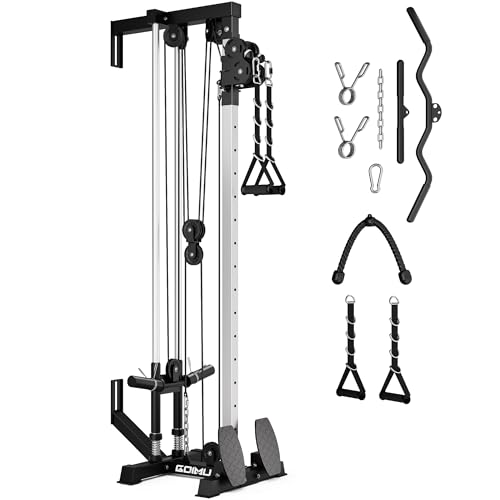
- Compact wall-mounted footprint
- 17 pulley height positions
- Switchable 1:1 and 2:1 ratios
Best For: Tight garage, apartment, or home-gym spaces
Most Versatile Folding System

- Folds to 4.3 square feet
- Five configurable training modes
- 15 pulley heights with dual 1:1 pulleys
Best For: Small spaces needing a foldable rack and functional trainer
Best Fold-Away Option
GMWD Wall-Mounted Cable Machine

- Folds flat against the wall
- 100+ exercise options
- 26 height and 13 angle settings
Best For: Compact home gyms needing flexible, wall-mounted training
Best Freestanding Value
CC01 Triangular Cable Crossover

- Uses a stated 12.1 sq. ft. footprint
- Includes pull-up and pulley stations
- 15 adjustable cable heights
Best For: Small gyms wanting a freestanding multi-station trainer
Best Ultra-Compact Wall System
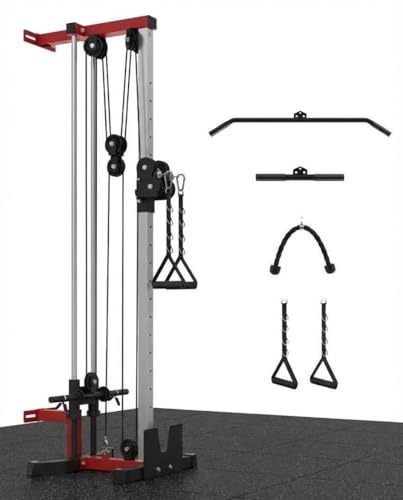
- Designed for a stated 4.7 sq. ft.
- 19 adjustable pulley positions
- Includes seated-row footboard
Best For: Very small rooms, apartments, and garage gyms
Best All-in-One Folding Rack
Folding Cable Crossover Power Rack
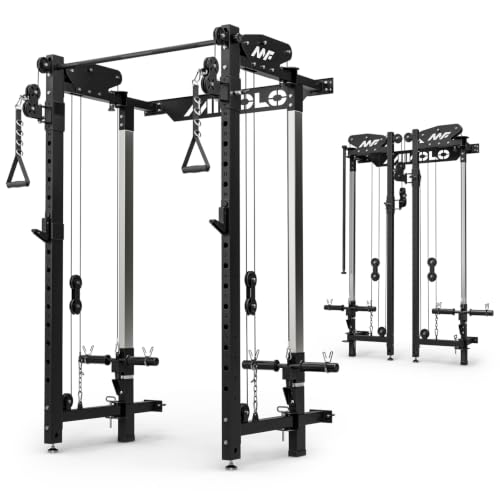
- Folds from 9.5 to about 3 square feet
- Combines rack, crossover, pulldown, and pull-up stations
- Rated for up to 1,000 pounds
Best For: Versatile home gyms that need a fold-away rack
Best Budget Wall Station
Compact Dual-Pulley Cable Machine

- Occupies about 3.25 square feet of wall space
- Offers 19 pulley adjustment positions
- Uses standard 1- or 2-inch plates
Best For: Small homes with existing weight plates
Best Selectorized Option
Compact Cable Tower With Weight Stack

- Includes a 155-pound selectorized stack
- Adds plate loading and 33 height positions
- Fits a stated 24-by-33-inch footprint
Best For: Small gyms wanting quick resistance changes
Compact Wall-Mount Pick – Mikolo Dual Pulley Cable Station
If you need cable crossover machines for small spaces, the Mikolo Wall Mount Cable Station offers a compact wall-mounted footprint with dual adjustable pulleys. Its 19 height positions, included attachments, and seated-row footboard support a broad range of home-gym exercises.
Best For: Home, garage, or office gyms that need a sturdy wall-mounted cable station with versatile adjustment.
Pros:
- Compact 26.9-by-25.6-inch footprint and 82-inch height for corner installation.
- Dual pulleys provide 19 height positions for unilateral or bilateral training.
- Includes a lat bar, cable bar, tricep rope, detachable plate sleeves, and footboard.
- 14-gauge steel frame and stated 400-pound maximum load capacity.
Cons:
- Wall mounting and an 82-inch height require suitable installation space.
- At 400 pounds, the unit may be difficult to move once assembled.
The Mikolo is a practical choice when floor space is limited but you still want adjustable cable work, seated rows, and multiple attachments in one station. Confirm wall clearance and ceiling height before buying.
Fold-Away Power Rack – Folding Squat Rack with Dual Pulleys
Among cable crossover machines for small spaces, this folding wall-mounted power rack stands out by combining cable training with a fold-away rack design. It adds a dual pulley system, pull-up bar, landmine, and multiple rack functions for users who want more than a standalone crossover.
Best For: Small home gyms, basements, and garages needing a multifunctional rack that can fold after use.
Pros:
- Folding design helps reclaim space when the rack is not in use.
- Dual 1:1 pulleys support independent crossover movements.
- Combines a power cage, cable station, lat pulldown, pull-up bar, and 360-degree landmine.
- Seven adjustable angles and a stated 1,000-pound capacity add training flexibility.
Cons:
- Wall mounting requires reinforced installation and adequate wall structure.
- The broader rack system needs more setup clearance than a compact cable-only station.
- Its included one-year warranty is shorter than some competing options in this roundup.
This rack is a strong space-conscious option for people who want one wall-mounted system to cover cable work and barbell training. Choose it if fold-away storage and all-in-one versatility matter more than the smallest possible footprint.
Adjustable Wall Station – GOIMU WM1 Cable Crossover
For buyers comparing cable crossover machines for small spaces, the GOIMU WM1 keeps its wall-mounted design especially compact while offering 17 pulley positions. Its switchable 1:1 and 2:1 ratios, removable footplate, and included handles make it adaptable for heavier lifts and lighter cable work.
Best For: Garage gyms, apartments, and other tight spaces with suitable concrete or masonry walls.
Pros:
- Small stated footprint of roughly 3.12 square feet and a 78.74-inch height.
- 17 height settings and dual independent pulleys support varied exercise angles.
- Switches between 1:1 and 2:1 cable ratios for different training styles.
- Includes a lat bar, cable bar, tricep/bicep rope, D-ring handles, and cable adaptor.
Cons:
- The notes specify installation on concrete or masonry walls, which may limit placement.
- Its stated maximum weight recommendation is 300 pounds, lower than some options here.
The WM1 makes a compelling case when every square foot counts and you want ratio flexibility without adding separate machines. Verify your wall type, mounting location, and available height before ordering.
Most Versatile Folding System – WM3-V4 Functional Trainer
If you want cable crossover machines for small spaces that can serve several training roles, the WM3-V4 combines a folding squat rack with a dual independent pulley system. It folds to a stated 4.3 square feet, then expands for use as a rack, functional trainer, cable crossover, or pull-up station.
Best For: Apartments, garages, and basements where flexible storage and multiple strength-training modes are priorities.
Pros:
- Folds to 4.3 square feet and expands to 12.3 square feet when deployed.
- Five configurations cover folded, rack, functional-trainer, and crossover use.
- Dual 1:1 pulleys allow independent cable movements and simultaneous training.
- Offers 15 pulley heights plus a pull-up bar, J-hooks, and safety arms.
Cons:
- The system needs substantially more floor space when fully deployed.
- Only a one-year warranty is listed in the supplied details.
- The notes do not list a complete set of included cable attachments.
The WM3-V4 is best viewed as a storage-conscious power rack and functional trainer rather than a cable-only machine. It suits users who want broad exercise coverage and can accommodate its larger operating footprint when unfolded.
Best Fold-Away Option – GMWD Wall-Mounted Cable Machine
If floor space is limited, the GMWD is one of the more practical cable crossover machines for small spaces. Its wall-mounted, foldable design can be stored flat against the wall, while adjustable arms and dual cable ratios support a broad range of home-gym exercises.
Best For: Small home gyms needing a foldable, wall-mounted functional trainer with extensive adjustment options.
Pros:
- Foldable wall-mounted design helps minimize the footprint when stored.
- Supports more than 100 exercises, including flyes, presses, pulldowns, curls, and woodchoppers.
- Offers 26 height adjustment holes, 13 arm-angle settings, and both 2:1 and 1:1 cable ratios.
- Includes several attachments and wall-mounting hardware for wood and concrete surfaces.
Cons:
- Requires secure wall installation rather than simple freestanding placement.
- At 165 pounds, mounting and setup may require substantial effort.
- The listed setup height is 77 inches, so ceiling clearance should be checked.
The GMWD stands out when storage efficiency is the priority. Confirm the wall structure, available ceiling height, and preferred cable ratio before buying.
Best Freestanding Value – CC01 Triangular Cable Crossover
The CC01 takes a freestanding approach to cable crossover machines for small spaces, using a triangular frame that occupies a stated 12.1 square feet. It combines high and low pulleys with pull-up bars, making it a versatile choice when you want multiple stations in one unit.
Best For: Apartment or home-gym users who want a freestanding functional trainer with pull-up and rowing capabilities.
Pros:
- Triangular structure is designed to use about 12.1 square feet of floor space.
- Supports seated rows, lat pulldowns, pull-ups, flyes, and lower-body cable exercises.
- Provides 15 height adjustment levels for varied cable movements.
- Uses commercial-style 50 x 50 mm steel tubing and includes several workout attachments.
Cons:
- Its approximately 64 x 54 x 82-inch dimensions still require meaningful floor and ceiling clearance.
- Assembly is best handled by two or three people and is estimated at about 1.5 hours.
- As a freestanding frame, it cannot fold away like a wall-mounted station.
The CC01 is a strong fit for buyers who need broad functionality without dedicating a large room to separate machines. Measure the full frame footprint and overhead space before assembly.
Best Ultra-Compact Wall System – Dual Pulley Cable Station
This wall-mounted dual-pulley system is designed for exceptionally tight workout areas, with the product notes describing a home gym in 4.7 square feet. Among cable crossover machines for small spaces, it is especially appealing for users who want cable crossover, lat pulldown, and seated-row functions without a conventional floor-standing frame.
Best For: Garage, apartment, or spare-room gyms that prioritize minimal floor use and multi-exercise capability.
Pros:
- Wall-mounted design is marketed for a 4.7-square-foot home-gym setup.
- Combines crossover, lat pulldown, seated row, and functional-trainer functions.
- Offers dual independent pulleys and 19 adjustable height positions.
- Includes a lat bar, straight bar, triceps rope, D-handles, T-bar, and seated-row footboard.
Cons:
- Wall mounting is required, so the installation surface must support the system securely.
- The listed dimensions are presented as 81.5 inches deep, 11.02 inches wide, and 5.71 inches high; verify how they apply to the installed unit.
- Weight plates are not listed among the included components, although the system is compatible with 1-inch and 2-inch plates.
The CM01 is a compelling space-saving choice when preserving floor area matters most. Carefully verify the installation layout and plate requirements before purchase.
Best All-in-One Folding Rack – Folding Cable Crossover Power Rack
For shoppers comparing cable crossover machines for small spaces, the Mikolo Folding Squat Rack stands out by combining several stations in one wall-mounted setup. It folds from a 9.5-square-foot open configuration down to about 3 square feet, making it practical for cramped basements, garages, and home gyms.
Best For: Users who want a fold-away rack with cable crossover, lat pulldown, pull-up, and power-rack functionality.
Pros:
- Folds down to approximately 3 square feet when not in use.
- Combines a power rack, dual cable crossover, lat pulldown, and pull-up bar.
- Offers 15 pulley height positions and a stated 1,000-pound capacity.
- Includes detachable pull-up bar, J hooks, and adjustable ground supports.
Cons:
- At 150 pounds and 86 inches tall, it still requires substantial installation space.
- Wall mounting and support-foot adjustment are necessary for stability.
- Its broad feature set may be more than needed for users seeking only cable work.
This is the most versatile choice of the three if you need a folding strength station rather than a standalone cable tower. Confirm wall structure, ceiling clearance, and the open footprint before installation.
Best Budget Wall Station – Compact Dual-Pulley Cable Machine
This wall-mount cable machine is a straightforward option for cable crossover machines for small spaces, using about 3.25 square feet of wall area. Its dual pulleys provide 19 adjustment positions for common movements while allowing you to load standard one- or two-inch plates.
Best For: Apartment, condo, or garage users who want a compact, plate-loaded cable station.
Pros:
- Uses a compact wall-mounted design measuring about 23.62 by 29.13 inches in depth and width.
- Provides 19 adjustable pulley angles for crossovers, rows, pulldowns, curls, and rotational exercises.
- Supports up to 400 pounds of stated dynamic weight.
- Includes mounting hardware and instructions for assembly.
Cons:
- Weight plates are sold separately.
- Offers less stated capacity than the Mikolo rack.
- Requires secure wall installation despite its relatively light 71.7-pound machine weight.
The WMCM-001 is a sensible space-saving pick when you already own compatible plates and want adjustable cable angles without dedicating floor space to a full cage. Its 80.31-inch height should still be checked against your ceiling.
Best Selectorized Option – Compact Cable Tower With Weight Stack
For those seeking cable crossover machines for small spaces with faster resistance changes, the WM2-V4 pairs a 155-pound selectorized stack with plate-loading capability. Its wall-mounted 24-by-33-inch footprint and 33 adjustment positions give it broad exercise flexibility while keeping the station compact.
Best For: Users who prioritize quick weight changes, multiple cable angles, and a compact commercial-style setup.
Pros:
- Includes a 155-pound selectorized weight stack for faster adjustments between sets.
- Also accepts one- and two-inch plates for additional loading options.
- Provides 33 adjustable height positions and a selectable 2:1 or 1:1 cable ratio.
- Uses aluminum pulleys and 14-gauge commercial steel tubing.
Cons:
- Its 155-pound stack may not satisfy users seeking very heavy stack-based resistance.
- Maximum listed weight recommendation is 350 pounds.
- Wall mounting and nearly 80-inch height still require careful installation planning.
This is the strongest fit for a compact home gym where convenience matters: the integrated stack reduces plate swapping, while the plate-loaded design and ratio changer add flexibility. It is a particularly good match for apartments, garages, and dedicated training rooms with limited floor area.
How We Picked the Best Cable Crossover Machines for Small Spaces
We focused on machines designed to conserve floor space without sacrificing useful exercise variety. The lineup includes wall-mounted cable stations, folding squat racks, dual-pulley functional trainers, and models that combine crossover work with lat pulldowns or pull-up stations.
Our comparison emphasizes practical specifications: number of pulley positions, independent versus linked cable movement, resistance capacity or included weight stack, frame configuration, attachments, installation demands, and the amount of clearance needed in front of and around the machine. Because product configurations can vary, verify the current included accessories, dimensions, and mounting hardware before ordering.
Quick Comparison
- Most space-efficient: Wall-mounted stations generally leave the greatest amount of usable floor area.
- Best for flexible training: Dual independent pulleys with numerous height positions support presses, rows, flyes, face pulls, and accessory work.
- Best for compound lifting: Folding squat-rack models add rack functionality while reducing depth when folded.
- Best for convenient resistance: A built-in weight stack avoids loading plates, but may offer less upgrade flexibility than plate-loaded systems.
- Best for broader home-gym use: Models with a lat pulldown, pull-up bar, removable footplate, or rack attachments can replace several separate stations.
Key Buying Factors for Cable Crossover Machines for Small Spaces
Measure the Complete Setup
Check the wall, ceiling, and floor dimensions—not just the frame size. Account for the pulley arms, loading sleeves, plates, bench movement, cable handles, and a safe training zone in front of the station. Folding equipment still needs enough room to unfold and lock securely.
Confirm Wall and Floor Requirements
Wall-mounted equipment must attach to suitable structural material using appropriate hardware. Drywall alone is not a sufficient anchor. Consider whether the machine needs additional floor brackets, a level surface, or professional installation, especially in an apartment or rental property.
Compare Pulley Adjustability and Motion
More adjustment positions improve exercise selection, but smooth travel and independent cable movement matter just as much. Swiveling pulleys can make pressing and fly movements more natural, while fixed systems may be simpler and more compact.
Match Resistance to Your Training
Review whether resistance is plate-loaded, stack-based, or supplied through another system. Check the stated capacity, included plates or stack weight, cable ratio, and whether the machine can be upgraded. Capacity figures are not the same as the resistance felt at the handle.
Inspect Accessories and Safety Details
Useful extras may include a lat bar, triceps rope, handles, footplate, pull-up bar, safety arms, or spotter supports. Also look for locking mechanisms, cable guards, sturdy adjustment pins, and clear guidance for assembly and maintenance.
Who Should Buy Which Cable Crossover Machines for Small Spaces?
Choose a basic wall-mounted cable station if floor space is your main constraint and you already own a bench, dumbbells, or rack. These models are well suited to general strength and accessory training.
Choose a folding squat rack with a cable system if you want barbell squat and bench-press capability in addition to cable exercises. It is a stronger all-in-one choice for users who can accommodate occasional setup and folding clearance.
Choose a high-adjustment dual-pulley trainer if multiple people will use the machine or you perform varied functional-training movements. Independent pulleys and more height settings offer greater flexibility.
Choose a model with a lat pulldown or weight stack if convenience and exercise coverage matter more than the lowest purchase price. These systems can reduce the need for separate equipment, provided your ceiling height, wall structure, and budget support the installation.