The right hydration belt keeps water, phone, keys, and small essentials within reach without turning every mile into a fight with bouncing gear. The options in this roundup range from minimalist flask carriers to higher-capacity belts with multiple bottles and storage.
Use the guide below to compare capacity, bottle access, adjustability, and comfort so you can choose a belt that matches your distance, pace, and preferred hydration routine.
Best 10 Running Hydration Belts Picks for 2026
Best Two-Bottle Pick
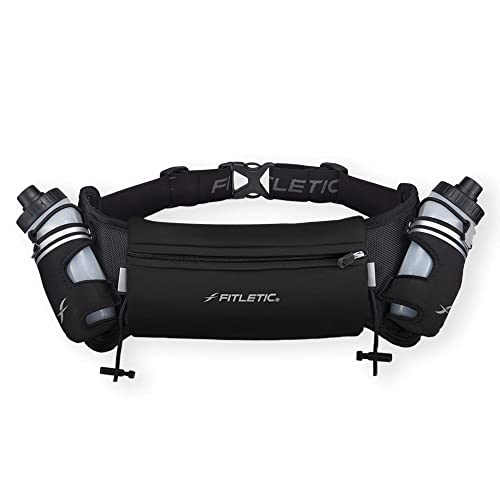
- Two quick-flow 8-ounce bottles
- Water-resistant large-phone pouch
- Gel holders and race bib toggles
Best For: Longer runs needing 16 ounces of hydration and phone storage
Best Insulated Bottle Design

- Includes insulated 600 ml bottle
- Angled holder for quick access
- Large zippered storage pocket
Best For: Runners wanting one temperature-retaining bottle and gear storage
Best Storage-First Pick

- Three organized storage pockets
- Fits 27- to 48-inch waists
- Reflective details and headphone port
Best For: Short runs where secure gear storage matters more than included water
Best Adjustable Fit
AiRunTech Hydration Running Belt

- Two 10-ounce push-pull bottles included
- Fits waists from 18 to 51.2 inches
- Large phone pocket and race bib toggles
Best For: Runners needing two bottles and flexible storage
Best Lightweight Design
CamelBak Ultra Running Hydration Belt
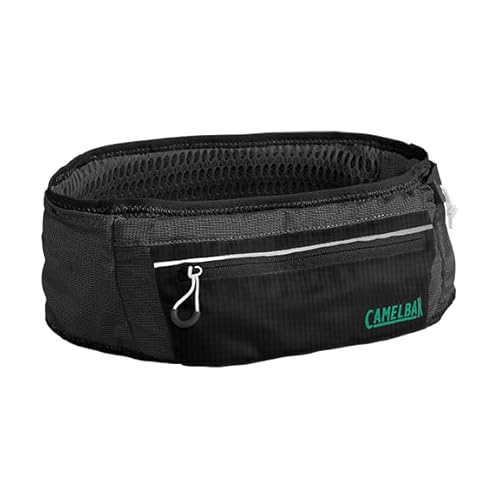
- Includes a collapsible 17-ounce flask
- Breathable 3D Micro Mesh construction
- Five pockets with phone and cargo storage
Best For: Distance runners wanting hydration without bulk
Best Easy-Access Bottle
Nathan Peak Hydration Waist Pack
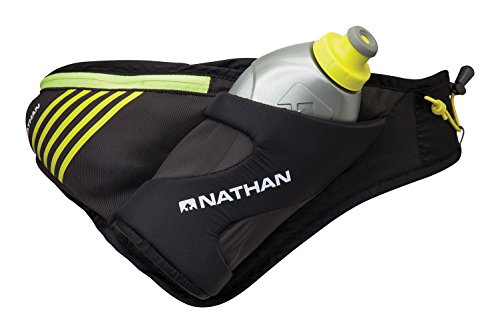
- Includes an 18-ounce Speed Draw Flask
- Angled holder supports one-handed access
- Expandable zippered pocket for essentials
Best For: Runners prioritizing quick bottle access
Budget Bottle Pair
Dual-Bottle Running Waist Pack

- Includes two 6.5-ounce BPA-free bottles
- Layered storage fits large smartphones and essentials
- Adjustable anti-slip fit for 27–59-inch waists
Best For: Short to medium-distance runs with extra storage needs
Trail-Mix Stability Pick
Nathan Trail Mix Plus Hydration Belt

- Includes an insulated flask and secure holster
- No-bounce design for stable movement
- Expandable phone pocket and exterior mesh storage
Best For: Lightweight runs and trail outings
Bring-Your-Own-Bottle Choice
AiRunTech Adjustable Hydration Belt

- Angled holder supports bottles up to 3.2 inches wide
- Three pockets fit phones, gels, keys, and cards
- Reflective tab and hook-and-loop adjustable fit
Best For: Runners who prefer using their own bottle
Best Two-Bottle Pick – Fitletic Hydra 16
For runners who want accessible hydration and phone storage, the Fitletic Hydra 16 is a practical choice among running hydration belts. It includes two 8-ounce bottles, a water-resistant pouch designed to fit large smartphones, gel holders, and reflective accents.
Best For: Runners who want 16 ounces of hydration plus organized phone and race-day storage.
Pros:
- Includes two quick-flow 8-ounce bottles for 16 ounces of total hydration.
- Water-resistant 8-by-4-inch pouch fits phones including iPhone Pro Max and Samsung Galaxy Ultra models.
- Neoprene tailored-fit design, gel holders, race bib toggles, and reflective accents add useful running features.
- Bottles sit in quick-draw hip holsters designed to reduce bouncing.
Cons:
- The listed S/M size fits waists from 24 to 34 inches, so sizing may be limited for some runners.
- The belt is listed for hand washing only.
The Hydra 16 stands out when bottle access and capacity matter more than a minimalist setup. Its combination of dual bottles and a phone-friendly pouch makes it well suited to longer runs and organized race days.
Best Insulated Bottle Design – Salomon Active Bottle Belt
The Salomon Active Bottle Belt combines a 600 ml bottle with a storage pocket in a lightweight running hydration belt. Its angled bottle holder is designed for quick access, while the insulated bottle construction helps maintain temperature during activities.
Best For: Runners and outdoor athletes who want one insulated bottle with accessible storage.
Pros:
- Includes a 0.6-liter 3D hydration bottle with thermic PE foam insulation.
- The 45-degree bottle angle supports easier access while moving.
- Large zippered pocket holds gels, nutrition, and other small essentials, with a key holder included.
- Lightweight, adjustable, and weather-resistant for running, hiking, and skiing.
Cons:
- It has one main pocket, which may provide less organization than multi-pocket belts.
- The unisex one-size design may not offer the same fit precision as a size-specific belt.
Choose the Active Bottle Belt if an insulated, easy-grip bottle is a priority. It offers a useful middle ground between simple hydration and carrying a small amount of fuel or gear.
Best Storage-First Pick – WATERFLY Running Belt
The WATERFLY Running Belt is a storage-focused option for runners who do not need an included water bottle. This running hydration belt alternative uses three pockets, a stretch waist strap, and a phone-friendly main compartment for carrying everyday essentials with minimal bulk.
Best For: Runners who carry a phone, keys, cards, and other small items and plan to hydrate separately.
Pros:
- Three pockets provide more organization for phones, keys, cash, cards, headphones, or an insulin pump.
- Fits 27- to 48-inch waists with an adjustable stretch strap and secure clip.
- Lightweight technical fabric is breathable, sweat-wicking, and water resistant.
- Reflective logo, headphone port, and slip-resistant buckle support practical run use.
Cons:
- No water bottle or dedicated hydration reservoir is included.
- The listed size is Large, which may not suit every runner despite the broad waist range.
- It is listed for hand washing only.
The WATERFLY is best viewed as an essentials carrier rather than a complete hydration system. It makes sense for short runs, gym sessions, or routes with water access where secure storage is the main concern.
Best Minimalist Hydration Pack – CamelBak Ultra Running Belt
The CamelBak Ultra Running Hydration Belt keeps the setup compact while including a 17-ounce collapsible Quick Stow flask. It also adds a zippered phone pocket, breathable 3D Micro Mesh, reflective details, multiple pockets, and integrated trekking-pole carry.
Best For: Runners who want lightweight hydration with extra fuel storage and trekking-pole carry.
Pros:
- Includes a collapsible 17-ounce Quick Stow flask for lightweight hydration.
- 3D Micro Mesh promotes airflow and cushioning to help manage heat and chafing.
- Zippered phone pocket and five-pocket layout provide useful storage for longer efforts.
- Reflective details and integrated trekking-pole carry add trail-running utility.
Cons:
- The included flask provides 17 ounces of capacity, less than some dual-bottle belts.
- The product information describes a 2.5-liter cargo capacity, but does not specify the organization of every pocket.
- Its specialized trekking-pole carry may be unnecessary for runners who stay on paved routes.
The CamelBak Ultra is a strong fit for runners who want more than a bottle carrier without moving to a larger vest. Its collapsible flask and gear-focused storage support long efforts while keeping the waist setup relatively lightweight.
Best Adjustable Fit – AiRunTech Hydration Running Belt
For runners who want multiple bottles and phone storage, this AiRunTech option is a practical choice among running hydration belts. It includes two 10-ounce BPA-free bottles, a large phone pocket, and an adjustable fit designed to stay secure during movement.
Best For: Runners, walkers, and race participants who want two bottles, phone storage, and race bib attachment points.
Pros:
- Includes two 300 ml push-pull bottles for convenient on-the-go drinking.
- Adjustable 18- to 51.2-inch fit with anti-slip grips to help reduce bouncing and chafing.
- Large phone pocket, reflective detail, headphone opening, and removable race bib toggles add versatility.
Cons:
- The bottles are supplied in randomly selected nozzle colors.
- Hand washing is recommended.
Choose this belt if storage and bottle capacity matter more than an ultralight setup. Its two-bottle design and broad waist adjustment make it useful for longer training sessions and organized races.
Best Lightweight Design – CamelBak Ultra Running Hydration Belt
The CamelBak Ultra is a streamlined pick among running hydration belts, pairing a 17-ounce collapsible flask with breathable mesh and dedicated storage. Its lightweight construction is suited to runners who want hydration and gear capacity without a bulky feel.
Best For: Distance runners and outdoor athletes who prefer a lightweight belt with organized storage and trekking pole carry.
Pros:
- Includes a collapsible 17-ounce Quick Stow flask.
- 3D Micro Mesh provides airflow and cushioning to help manage heat and chafing.
- Five pockets include a secure phone pocket and up to 2.5 liters of cargo capacity.
- Reflective details and integrated trekking pole carry support early, late, and trail outings.
Cons:
- It includes one flask rather than multiple bottles.
- The listed flask capacity is 17 ounces.
This is a strong fit for runners who prioritize low weight and flexible gear storage. The collapsible flask can reduce bulk after drinking, while the cargo space accommodates fuel and other essentials.
Best Easy-Access Bottle – Nathan Peak Hydration Waist Pack
The Nathan Peak combines a body-hugging fit with an angled bottle holder for quick, one-handed access. Among running hydration belts, it suits runners who want a single larger flask, protected essentials, and a compact design for runs, walks, or hikes.
Best For: Runners who value one-handed bottle access, a secure fit, and expandable storage for essentials.
Pros:
- Includes an 18-ounce Speed Draw Flask with a push-pull race cap.
- Angled insulated bottle holder helps make one-handed access easier.
- Expandable zippered stretch pocket protects essentials while the belt stays compact.
- Reflective detailing improves visibility in dim light.
Cons:
- It is not water resistant according to the listed specifications.
- Storage is limited to two pockets.
Pick the Nathan Peak when quick bottle retrieval is a priority. Its 18-ounce flask offers more listed capacity than the CamelBak option, while the extended side panels are designed to hug the body without interfering with movement.
Budget Bottle Pair – Dual-Bottle Running Waist Pack
For runners comparing running hydration belts, this waterproof waist pack stands out by including two 6.5-ounce BPA-free bottles. Its adjustable, anti-slip waistband and layered storage make it practical for short to medium runs where you also need room for a larger phone and small essentials.
Best For: Short to medium-distance runners who want two included bottles and generous phone storage.
Pros:
- Includes two 175 ml BPA-free water bottles with elastic holders.
- Large zippered compartment with layered pockets fits phones, keys, cards, and other small items.
- Stretchable anti-slip waistband fits 27 to 59-inch waists.
- Neoprene construction is sweat- and water-resistant and machine washable.
Cons:
- The included bottles are relatively small at 6.5 ounces each.
- The belt is listed as water resistant rather than fully waterproof.
This is a versatile value option for everyday training, walking, cycling, or hiking. Choose it if included bottle capacity and multi-pocket organization matter more than a minimalist setup.
Trail-Mix Stability Pick – Nathan Trail Mix Plus Hydration Belt
Among running hydration belts, the Nathan Trail Mix Plus focuses on a lightweight, secure carry. It combines an insulated flask setup with a redesigned holster, no-bounce construction, expandable phone storage, and an exterior mesh pocket for quick-access items.
Best For: Runners who prioritize a lightweight, stable belt with an included flask and organized storage.
Pros:
- Updated holster supports secure one-handed flask access.
- No-bounce design helps keep the belt in place while running.
- Large expandable front zippered pocket fits most phones.
- Lightweight design weighs 10 ounces with the flask and offers 0.5 liters of storage capacity.
Cons:
- Listed as not water resistant.
- Provides two pockets, which may offer less organization than larger multi-pocket belts.
- Care is limited to spot cleaning or hand washing.
The Trail Mix Plus is a focused choice for runners who want a compact hydration belt rather than a high-capacity running pack. Its flask-access and stability features make it well suited to training sessions and trail outings.
Bring-Your-Own-Bottle Choice – AiRunTech Adjustable Hydration Belt
This AiRunTech option is one of the more flexible running hydration belts because it lets you use a compatible bottle rather than supplying one. Its angled holder, hook-and-loop adjustment, three pockets, reflective tab, and headphone hole are designed for runners who want a close-fitting belt with room for everyday race essentials.
Best For: Runners who already have a bottle and want an adjustable, bounce-resistant belt with reflective details.
Pros:
- 45-degree bottle holder is designed to distribute weight and reduce movement.
- Flexible carrier fits bottles up to 3.2 inches in diameter and includes a securing loop.
- Three pockets accommodate phones up to 6.6 inches, keys, cards, gels, and other small items.
- Reflective tab, headphone hole, and exterior bungee add useful running features.
Cons:
- Water bottle is not included.
- Hand-wash-only care may be less convenient.
- Water resistance is listed as water repellent, not waterproof.
This belt is a strong fit for endurance training and races when you prefer to choose your own bottle. Its low-hip fit and angled carrier emphasize stability, while the storage layout supports longer outings with gels and personal items.
How We Picked These Running Hydration Belts
We focused on the features that matter most during actual runs: secure fit, low bounce, accessible bottles, useful storage, comfortable materials, and practical capacity. The selection includes compact waist packs, single-flask designs, and belts with two bottles for runners who need more fluid between refills. We also considered whether each design can carry common essentials such as a phone, keys, cards, or energy gels.
Because runners have different needs, no single belt is best for every route. A lightweight option may be ideal for short runs, while a larger design can be more useful for long training sessions, trails, or warm-weather outings.
Quick Comparison
| Best For | Look For | Typical Capacity |
|---|---|---|
| Short runs | Minimal bulk and a secure phone pocket | One small flask or bottle |
| Long training runs | Larger storage and easy bottle access | One 17–18 oz flask or more |
| Hot-weather routes | Higher fluid capacity and stable fit | Two bottles or multiple containers |
| Trail running | Expandable storage and bounce control | Flask plus gels and essentials |
Key Buying Factors for Running Hydration Belts
Capacity and Bottle Design
Choose enough fluid for your route without carrying unnecessary weight. A single flask works well when fountains are available; two bottles or greater capacity make more sense for longer, hotter, or less supported runs. Push-pull and quick-flow caps can make drinking easier without stopping.
Fit and Bounce Control
A belt should sit securely around your waist or hips without sliding, pinching, or restricting your stride. Adjustable straps help fine-tune the fit, while a close-fitting design and evenly distributed weight reduce bouncing. Test the belt with a full bottle and your usual clothing layers.
Storage and Accessibility
Check whether the pocket fits your phone with its case and whether you can reach it while moving. Zippered compartments are useful for keys and cards, while stretch pockets can hold gels or gloves. Keep heavier items centered when possible to improve stability.
Comfort and Weather Resistance
Breathable, soft materials can reduce irritation during longer runs. Water-resistant fabric helps protect contents from light rain and sweat, but it is not always fully waterproof. Consider visibility details if you run near traffic or in low light.
Who Should Buy Which Running Hydration Belts?
- Choose a minimalist flask belt if you mainly run short distances and want the least bulk possible.
- Choose a two-bottle design if you need more fluid capacity or want to separate water from an electrolyte drink.
- Choose a belt with expandable storage for trail runs, long-distance training, or carrying gels and extra layers.
- Choose a phone-focused waist pack if storage is your priority and you usually rely on fountains or refill points.
- Choose an insulated or structured option if you run in heat and want improved bottle stability and temperature control.
Before buying, measure your waist and compare it with the manufacturer’s size range. Then prioritize the smallest capacity that comfortably covers your normal route; a lighter, better-fitting belt is usually more useful than an oversized one that bounces.